Remembering Mario Cuomo and the Legacy He Left Us on the Anniversary of his Death

(Reposted from my “Radical Correspondence” Blog of January 7, 2015)
10900064_10153041927937959_8048894028149912355_o

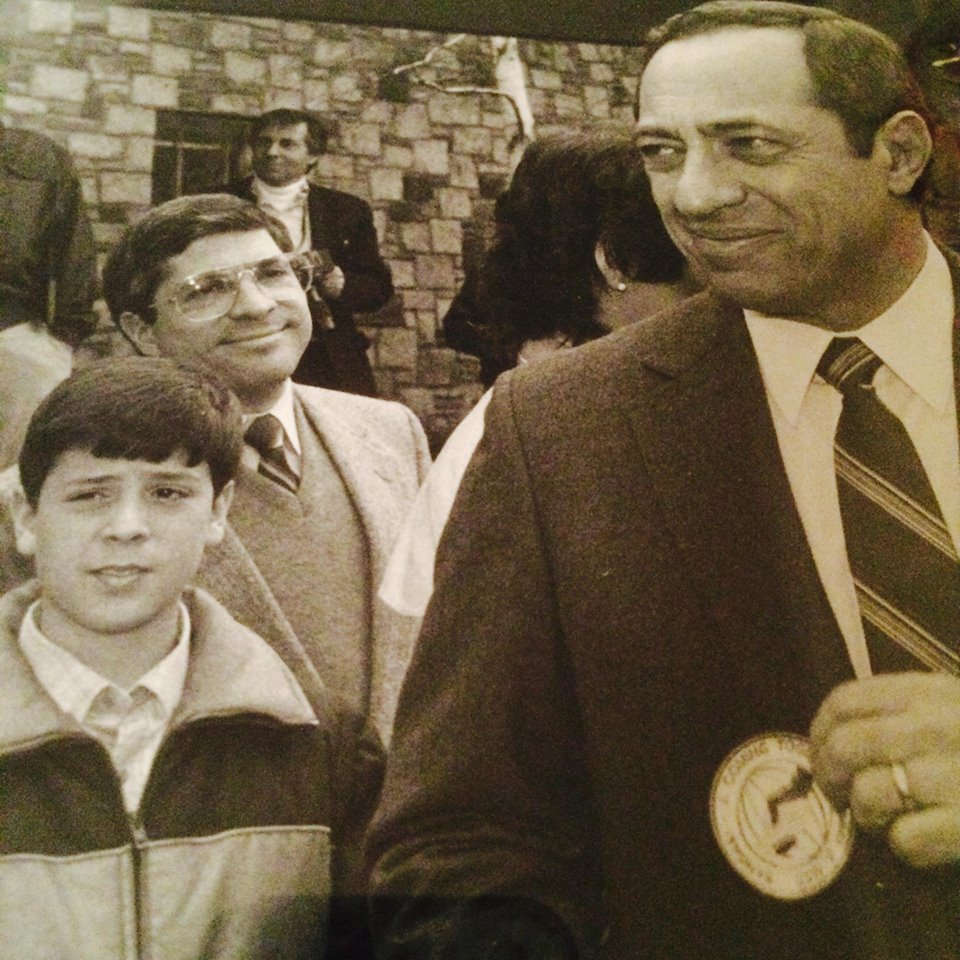
(Mario Cuomo, me and my son, Matt Villano, following an event 30-years ago where Cuomo inspired young people to be part of something bigger than themselves)

Mario Cuomo died this week, and Andrew Cuomo was re-born.

Andrew Cuomo’s simple and eloquent eulogy to his father on January 6, 2015, was a bold and loving seizing of the the torch of humanist leadership his father ignited 33 years ago. In a remarkable love song to Mario Cuomo, Andrew Cuomo became his father.

That chiseled, stately, large and determined face was the same look I witnessed up close on Mario Cuomo, many, many times. Snow falling on Andrew’s dark hair, and dark suit, dramatized the somber yet historic nature of what was about to happen even more. I witnessed Mario Cuomo prepare for, and deliver, hundreds of speeches during the eight years I worked with him; I studied each line in Mario Cuomo’s face as he read each line of his speeches, and as he black-lined out others. Getting what he “needed to say” just right was of great importance.

Up until this week, few of Andrew Cuomo’s speeches were memorable. Actions counted more to Andrew than words. Speech-making was often just another tool in the second Governor Cuomo’s operational repair kit for government. All that changed with Andrew’s eulogy for his father.

For once, Andrew Cuomo’s words and emotions moved us, and, more importantly, they may have moved him toward his father’s progressive, other-centered, enlightened form of leadership. Andrew’s words, personal and powerful, were a radical departure from his pedestrian prose of the past. His words were transcribed from his heart to the page from which he was reading, just as his father advised.

“Mario Cuomo was at peace with who he was and how he saw the world. This gave him great strength, and made him anything but a typical politician,” Andrew Cuomo said, after recounting his father’s advice about speechmaking to him. “Who cares about what the audience wants to hear; it’s not about what they want to hear–it’s about what you want to say.”

“And that, my friends,” Andrew Cuomo said to a church-full of mourners, including Bill & Hillary Clinton, “was the essence of Mario Cuomo.
He was not interested in pleasing the audience: not in a speech, not in life. He believed what he believed and the reaction of the audience or the powers that be, or the popularity of his belief was irrelevant to him.”

Andrew elaborated: “He wasn’t really a politician at all. Mario Cuomo’s politics were more a personal belief system then a traditional theory. It was who he was. Not what he did. My father was a humanist. He had strong feelings of right and wrong based on his religion, philosophy and life experiences. He was very concerned with how people were treated and that was the arena that drew him in….”

Then, Andrew Cuomo shared the essence of Mario Cuomo: “At his core he was a philosopher and he was a poet, an advocate and he was a crusader. Mario Cuomo was the keynote speaker for our better angels. He was there to make the case, to argue and convince, and,in that purist he could be a ferocious opponent and powerful ally. And, he was beautiful. He believed Jesus’ teachings could be reduced to one word, and the word was love. And love means acceptance, compassion and support to help people.

Then, Andrew Cuomo gave everyone insight into his relationship with his father: “It is this simple. I was devoted to my father, from the time I was 15 joining him in every crusade. My dad was my hero, my best friend, my confidante, my mentor. We spoke almost every day and his wisdom grew as I grew older. . But we carried the same banner. I helped him become a success and he helped me become a success and we enjoyed deeply each other’s victories and we suffered the pain of each other’s losses. My only regret is that I didn’t return from Washington to help in his 1994 race. Whether or not I could have helped, I should have been there. It was the right thing to do and I didn’t do it.” Powerful, and deeply personal, and unlike anything Andrew Cuomo has said before.

“Why didn’t he run for President, people asked? Because he didn’t want to,” Andrew Cuomo said. He was where he thought God wanted him to be. For Mario Cuomo, the purpose of life was clear — to help those in need and leave the world a better place.”

“I believe my father’s spirit lives,” the son said, citing family and community examples. “I will listen for your voice. You taught us well, you inspired us, we know what we have to do and we will do it. On that, you have my word, as your son. I love you pop, and always will.”

Posted in Latest News, Uncategorized | Leave a reply

Will the NBA Teach the Cable Industry to go Gunning for GunTV?


IMG_8712


Just in time for the marathon Christmas Day viewing of NBA games, the National Basketball Association, in a powerful partnership with Everytown for Gun Safety, announced a high profile television PSA campaign featuring some of the games greatest stars.

Inspired by a meeting between filmmaker Spike Lee, who is a member of Everytown’s creative council, and ESPN, the NBA, fearlessly plunged into the fray, recognizing its moral and social responsibility to make neighborhoods less violent, in many of the communities which players, and fans, call home.

SF Warriors’ star Steph Curry is featured in one of the public service announcements, saying he was moved to take action when he heard about a recent three-year old victim of gun violence.

“My daughter Riley’s that age,” Curry says, bringing the message directly to tens of thousands of NBA fans who watched Curry introduce Riley to the national media last year, when the Warriors won the NBA World Championship.

Heading the effort for the NBA is friend and former colleague from the Administration of Governor Mario M. Cuomo of New York State, Kathy Behrens, who serves as the NBA’s President for Social Responsibility and Player Programs. Behrens is a dynamo with a conscience who gets things done, and turned New York Cares into one of the most successful non-profits in NYC, before being recruited by the NBA.

“ We know that far too many people have been caught up in gun violence in this country,” Behrens told the New York Times. “And, we can do something about it.”

The same passionate desire to constructively use his resources and save peoples’ lives was what motivated former NYC Mayor Michael Bloomberg to form Everytown For Gun Safety. With Bloomberg’s financial backing the group has become one of the nation’s most aggressive advocates of stricter limits on firearms sales in just a few short years.

It’s too bad the rest of the Cable Television industry—with the notable exception of ESPN, a partner with the NBA and Everytown– is choosing to totally abandon any sense of social responsibility when it comes to gun violence. In fact, one of the industry’s own insiders, Doug Bornstein, who helped launch over 15 shopping networks via Direct TV, Dish and all Cable Networks, is “doing something” about guns—he’s launching GunTV next month, to make more money by selling guns the way viewers can buy any product on QVC or the Home Shopping Network.

Bornstein, who was President/CEO of Broadcast Cable Media, Inc., for 30 years—a media buying agency specializing in long form advertising and shopping networks—has lots of friends in the Cable TV and Satellite business who see nothing wrong with putting more guns and ammunition in circulation. Cynically, Bornstein and his wife and business partner Valerie Castle, call GunTV’s parent company “The Social Responsibility Network.”

Apparently, “Social Responsibility” to Bornstein and Castle is defined as “responding to a nationwide love affair with shooting sports,” as Castle told The Desert Sun newspaper of Palm Springs last month. GunTV, whose plans came to light during the week of the San Bernadino gun-massacre, will be based out of a television studio in the Coachella Valley.

But the issue of social responsibility goes far beyond Bornstein and Castle, who plan to launch GunTV.tv (which they are cleverly disguising as “GTV Live Shopping”) on January 20, 2016. To set a date for a network launch, GunTV had to get major commitments and contracts from cable sytems and satellite carriers.   Who gave those commitments? Who signed those contracts? Why is Comcast’s Brian Roberts silent on this matter? His multi-billion dollar Cable conglomerate serves the most U.S. urban areas with the highest levels of gun violence in the world. Don’t you care about the lives of your customers, Brian? What about Time Warner Cable which serves LA and NYC? Are you carrying GunTV, Jeff Bewkes? Does GunTV pass any kind of standard of social responsibility? Does any standard of social responsibility even exist  for television or cable?   Where is the National Cable Telecommunications Association (NCTA) leadership on this? Why hasn’t the Federal Communications Commission expressed its’ disapproval? Are any products fair game to be sold on television? I’ll take two AK-47’s and a missile launcher, please.

It’s time for the NBA’s Kathy Behrens, Everytown’s Michael Bloomberg, the Warriors Steph Curry, and filmmaker Spike Lee to teach TV & Satellite industry execs what “Social Responsibilty” means. It won’t be found on GunTV.tv, where guns and ammo are plentiful and where their moral code is:  “Live Shopping.  Fully Loaded.”
IMG_8713

NBC & Mark Burnett’s New Reality Show: “The Quasimodo of Queens.”

12247136_10153851200639925_1248601257416070492_n

Tom Brokaw’s two and one-half minute noble tsk-tsking of Donald Trump’s full-blown Fascism—coming at the tail end of a little-watched Tuesday night 6 pm newscast—was far too little, way too late from the Broadcast network which made Trump an international TV star and helped launch his political career.

Now that Trump’s big, ugly Un-American backside has been bared for all to see, those wonderful folks who gave this monster a global platform to pedal his pernicious views, are beginning to have some second thoughts, but very few have anything to do with soul searching. NBC, for example did pay Donald Trump a total of $213, 606, 575 in salary to host 14 seasons of “The Apprentice”—an average of about $15 million per season, according to documents Trump’s campaign filed with the Federal Elections Commission. Then, after they handed Trump the bully’s pulpit to pick on everyone from the disabled, to Mexicans, to Syrian Refugees, to wounded war veterans, to Muslims, NBC—no longer seeing profit in Trump’s pugnaciousness—fired the Towering Inferno after he insulted all Mexicans in late June, 2015, during his announcement for President. NBC’s Latino market was just too big for the network to fail.

Financially, as well as cosmetically, NBC’s announcement to Dump Trump was good business. Following its’ first five years, “ The Apprentice” began to rapidly lose market share. NBC meanwhile, had become the NBC/Universal/Comcast monolith after 2009, rolling up big new profits in its cable, movie and amusement park businesses. Donald Trump, like Brian Williams, was expendable, especially since company chiefs Brian Roberts and Steve Burke are attached to their $30 million plus annual salaries. Trump no longer fit Comcast’s “do no fiscal harm policy”; the days of Trump and Mark Burnett’s United Artists Media Group raising revenue and NBC’s prime time ratings were over.

NBC and Burnett made Donald Trump—long viewed as another wannabe starlet in New York politics–richer, far more famous, and extraordinarily more powerful than he had ever been before. Trump’s small million dollar start up loan from his father, inheritance of the Trump real estate fortune built with federal funds for constructing middle-income housing, and even a New York Daily News front page headline boasting of the “Best Sex I’ve Ever Had” with Marla Maples, weren’t enough to get him the kind of attention he craved. He looked like a silly little post-card painter without serious recognition of his talent.

Then, along came Mark Burnett and NBC, and the inner Trump was let loose in the living rooms of millions of Americans through the mindlessness of Reality TV. Burnett, Trump’s co-producer on “Apprentice” and “Celebrity Apprentice”, and a prime mover in bringing Reality TV to American television with his “Survivor” in 2000, and other programming such as “The Voice,” “Shark Tank,” “ Sarah Palin’s Alaska (yes, that too) and, the aptly named “Are you smarter than a fifth-grader?” boasts a net worth estimated at somewhere between $385 million to $450 million—a fortune built on convincing Americans that eating bugs and spitting bile at people was entertainment.   Trump spotted a winning formula for his brand of bragadaccio, and a malleable audience to swallow his hollow values and hateful views.

Forbes reported earlier this year that Trump’s entertainment-related income since 2004—the first, and most successful year of “The Apprentice”– was approximately $500 million, from his books, speeches, beauty pageants and Reality-TV employment, the bulk of which, came from NBC, and was made possible by his ten-year run on the NBC aired reality show–including nearly $100 million in product-placement fees Trump and “Apprentice” co-producer Burnett got from shaking down program sponsors like Pepsi and Crest.

NBC can roll out all of the Tom Brokaw mea culpa commentaries it wants; it can feign high-dudgeon by having Joe Scarborough cut off Trump after allowing the Quasimodo of Queens to rant on for four minutes. The network created this monster, and, with the willing leadership of programming ghouls like Mark Burnett, it disarmed the audience of any analytical ability to recognize that its collective brain was being snatched.


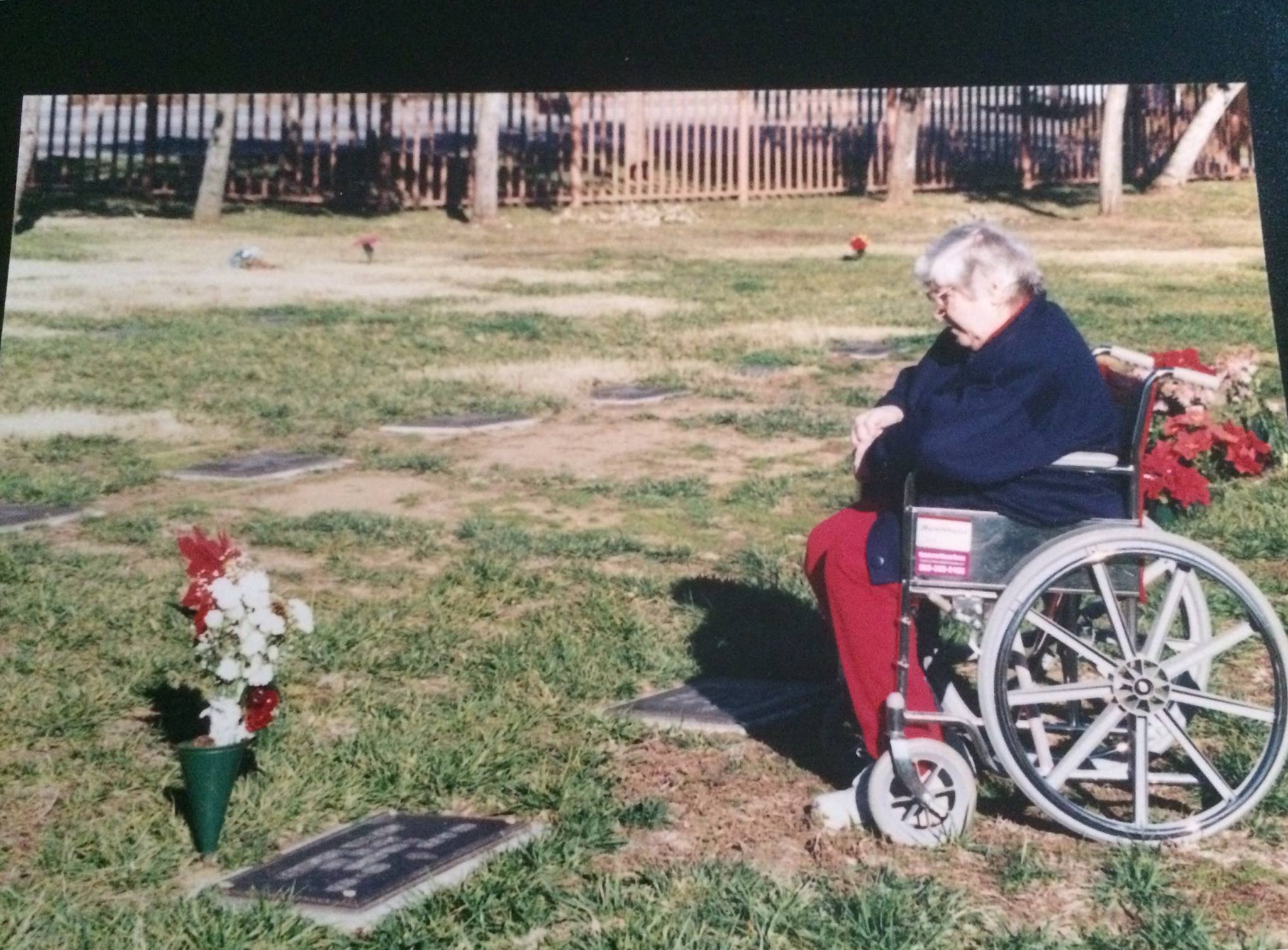
Donald Trump Couldn’t Polish the Chrome on My Mother’s Wheelchair, The Loser.

12195127_10153766083097959_8809662941512850993_o


My mother was a beautiful Italian woman of great dignity, faith and courage. She was born during the Polio Epidemic of 1915-16, and paralyzed on one side of her body. She considered herself fortunate that it wasn’t worse. When she saw other “Polio children” in the Crippled Children’s Home where she spent several months–living their lives in Iron Lungs because they could not breathe–my mother was grateful that she only lost the use of one arm.

From her earliest days, my mother faced hateful discrimination because of her disability. Her father, an ignorant, arrogant, bull-headed Italian macho-man, told her she’d never get a job or get married because of her “limp” arm. As a “polio” child born in the Italian neighborhood of Greenwich Village, NYC public health restrictions kept her out of public swimming pools. When she was sent upstate New York to a New York Times “Fresh Air Fund” camp for disabled children, she noticed signs in front of private camps throughout the Catskills which read: “NO POLIO CHILDREN ALLOWED.”

My mother taught herself to swim in the waters off Coney Island, using her “one good arm”, and raised and diapered four children in the days when diapers were made of cloth, and all washing was done by hand. She never complained, nor cursed her disability, even when my father went off to World War II to fight Fascism and she was left alone, to care for three children, with her youngest still in diapers.

My mother never got a “small” stake of $1 million from her father, as Donald Trump did, nor did she ever delight in calling people names or insulting them. She was a devout Catholic until the moment of her death in 2007, and believed in the kind of all loving God that Pope Francis has preached about over the last few years. Money never mattered much to my mother; human dignity, kindness, caring and love were the sources of her wealth. Her life-long disability made her even more sensitive to all kinds of human frailties.

I thought of her this week watching the news coverage of Donald Trump mimicking disabled New York Times Reporter Serge Kovaleski. My mother, loving and forgiving as she was, would have been outraged.

“You miserable son-of-a-bitch,” I imagined her yelling at the television as Trump mocked Kovaleski. “You should be forced to spend time in a Crippled Children’s Home to see people struggling to live each day with a disability.”

My mother’s political hero was FDR because he showed the world how a person with a disability—Polio, specifically—could accomplish great things for others. When FDR helped launch the “March of Dimes” to raise vast sums of money for Polio research, my mother sent off her annual contribution of dimes with a religious fervor for decades.   With FDR fighting for a cure, surely one would be found, she told us. She was proven right in 1954, when Dr. Jonas Salk discovered the Polio Vaccine.

My mother isn’t alive today to call Donald Trump a miserable son-of-bitch, for making fun of the disabled. So, I will. This son of a courageous Polio survivor thinks you’re a miserable son-of-a-bitch, Trump, and a loser of the lowest order.

First you picked on Mexican immigrants and called them criminals and rapists—some of the same slurs that were thrown at the Chinese 135 years ago, Italians 100 years ago, and Cuban immigrants, 35 years ago. Next you attacked political refugees, escaping certain death and oppression, and advocated the anti-American and unconstitutional action of registering people on the basis of their faith–an action taken by Fascist regimes against the Jews during World War II.  Then you cheered on while some of your White Trash supporters beat up a black man for having the courage to stand up to your pernicious political views. And, finally, you mocked a man—a national treasure of a journalist—simply because he told the truth about another one of your huge lies.

My father fought Facists like you in World War II, Trump. My wife’s Uncle died fighting them in Italy. My mother fought bigots and brutes everyday of her life. It’s in the spirit of these battlers against bullies like you, that I’ll continue their fight, Donald, you miserable son-of-a-bitch. You couldn’t polish the chrome on my mother’s wheelchair, you loser.


The last time I saw Paris…


IMG_4947

IMG_4948-2


The last time I saw Paris was three years ago this Spring. It was the first time, too. I had been to France before, to Nice and Cannes, but Paris required a special trip, and undivided attention–like a demanding lover.

We rented a clean, compact apartment in the Marais District, with large casement windows that opened up to a sunny courtyard. I loved opening the windows to hear the day awaken: the sounds of grown ups clop-clopping their serious business shoes on the courtyard’s cobblestone as they went off to work; the shrieks and laughter of French children racing each other to school.

We shared the apartment with lifelong friends who understood my need to just be by myself, walk around the City and hang out in coffee shops whenever I wanted, watch people and simply inhale life. Paris was made for such things.

I could care less about seeing the Eiffel Tower, or Montmartre. The Bastille was now a flea market where cheap dresses were sold, and long lines of tourists slithered past the gargoyles of Notre Dame. I fell in love with the D’Orsay, watching an entire class of second grade students sitting still in front of a statue and sketching it, under the unerring eye of their talented teacher.   I lost my patience at the Louvre, where I found myself forced back to Brooklyn, screaming at a selfish clod taking a selfie while he sat in the lap of a 600 year-old reclining nude.

“Ne touche’ pas,” I shouted, before realizing that the art vandal understood neither English nor French. He did, however, understand Brooklynese, especially when punctuated by aggressive hand gestures.   My passionate protection of the art of generations should have been my warning: I was falling in love with Paris and I when I loved someone, my fierce loyalty kicked in if they were ever threatened.

We explored Shakespeare & Company bookshop, standing behind Sylvia Beach’s desk, looking out the window where she wrote as she looked out at Paris and imagined all sorts of lives being lived, loves being whispered, on the streets below. We stepped outside in front of the bookstore and watched a free puppet show, where the tug of each string seemed to be attached to the smiles of the humans stopping for some creative fun in the middle of their day.

The Seine beckoned, and we strolled across a bridge laced with padlocks, and down a stone stairwell, smoothed by time, weather and thousands upon thousands of shoes. We boarded a boat and rode the River until sunset, back and forth, traveling back in time to a moment which did not move, until the sun finally disappeared and the sky dipped into a darker and deeper purple. We walked all the way back to the Marais, intoxicated on the night air so thick with life.

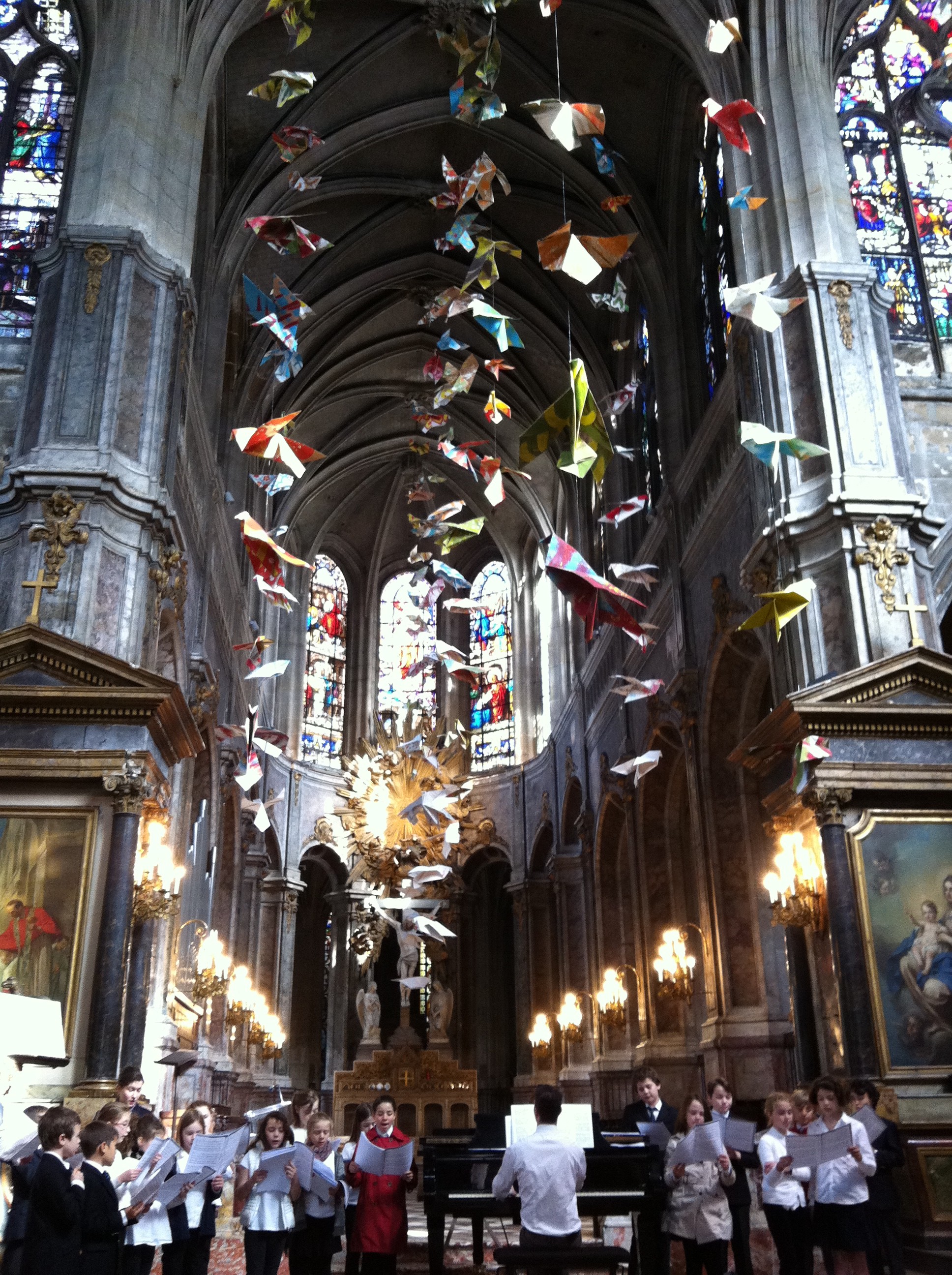
Next morning, on my own, I bounded into a French bakery, bought a hot, crusty baguette, and devoured the entire loaf before camping out in a coffee shop which became my comfortable nest for the day. On the way back to the flat, I heard music coming from an old church around the corner. The doors were open. I walked in and stopped. In front of the altar, stood a few dozen boys and girls, no older than 12 or 13, each holding a sheet of music and sounding like angels with soprano voices, to piano accompaniment. Above them, climbing up to the tall stained glass windows, were hundreds of paper cranes of all sizes and colors. Peace cranes, I thought; Sadako’s paper cranes of peace, multiplying by the millions around the world after the horrors of Hiroshima and Nagasaki. This was Paris: a place of music and light, life and remembrance and hope, eternal hope. Somehow, eyes filled with tears, I found my way back to the apartment.

I was seduced by Paris’ open arms, a free and easy pace, which encouraged you to do everything, or nothing at all. It was a gentle kiss, a warm caress; a children’s song overflowing with life, and I can’t get it out of my mind.


A Blood Stained “Song of Peace”

IMG_8207


Twenty-three years ago, I had the honor of meeting Israeli Prime Minister Yitzhak Rabin on an official State visit to Israel with New York State Governor Mario M. Cuomo, with whom I worked at the time.

Prime Minister Rabin, joined by his wife Leah, welcomed us into his office—a simple, straightforward office without ostentation, like the man himself. It was an office that looked like it belonged to a high school principal, rather than the leader of a powerful nation.

Mr. Rabin’s manner was as forthright and unassuming as his office. I sat next to the Prime Minister, by his left side. Governor Cuomo sat across from him and Mrs. Matilda Cuomo and Mrs. Rabin sat next to one another, to the right of the Prime Minister. The conversation was warm and cordial. Cuomo was well-liked and highly respected by Israeli Labor Party leaders Rabin and Shimon Peres.

We talked of Cuomo’s first—and only—trip to Israel: a pilgrimage made after the death two months earlier of Rabbi Israel Mowshowitz, the Governor’s long-time confidant and my friend, in whose memory we planted a tree on a hillside overlooking Jerusalem.   Rabbi Mowshowitz urged Cuomo to visit Israel for years. President Rabin, with the world to worry about, expressed fond remembrances of this simple, yet remarkable, Rabbi from Queens, N.Y.

In office just a few short months, Rabin talked of his plans for pursuing peace in Israel and throughout the Middle East. He looked at each of us squarely, as he spoke in his deep, monotone, mournful voice. I studied Rabin’s face carefully: a face chiseled with sadness, with eyes that had seen too much death and suffering. Later, I would learn that this good man, haunted by the thought that he was leading young Israeli soldiers to their slaughter, suffered a nervous breakdown during the 1967 War—the War which secured the Golan Heights and the West Bank for Israel, and represented Rabin’s greatest military victory.

I watched his face in September, 1992, and saw the sadness slip away each time he spoke of his hopes for bringing peace to the land of his birth. I can still hear his voice, that somber voice, warning us of the grave threats to peace posed by political extremists among both his own people and the Palestinians. Just the day before in a public park in Jerusalem, I witnessed some of the Right Wing Jewish extremists Rabin referenced. They tried to shout down Jerusalem Mayor Teddy Kollek, speaking at a public event, because Teddy believed that all faiths should be able to worship freely at their holy sites in that Holy City.

I can still feel Yitzak Rabin’s gaze into my eyes, the firm yet gentle look of a man who had known love and loss, weakness and strength, sorrow and joy, victory and defeat. I can still feel the sweet contradiction in the strength of his handshake and the softness of his voice when he wished each of us “Shalom.” It was the last word he spoke to us.

Three years later, at a public rally, he sang the words to the “Song of Peace.” He folded the paper on which the words to the song were written, and gently placed it in his jacket pocket. Minutes after that,  an assassin’s bullet ended his life. The folded paper containing the lyrics to the “Song of Peace,” were found covered with blood.

At Rabin’s funeral, his former speechwriter, Eitan Haber, read the “Song of Peace” from the blood-stained prayer page, found in Yitzak Rabin’s jacket pocket:

“ Let the sun rise, the morning shine,

The most righteous prayer will not bring us back.

Who is the one whose light has been extinguished,

And buried in the earth;

Bitter tears will not wake him; will not bring him back.

No song of praise or victory will avail us.

Therefore, sing only a prayer of peace.

Don’t whisper a prayer—

Sing aloud a Song of Peace.”