Marco Rubio has long set his sights on liberating Cuba from Communism, riding a wave of Cuban-Exile idolization to the White House. He also lied about his parents fleeing Castro’s Cuba as “exiles.”
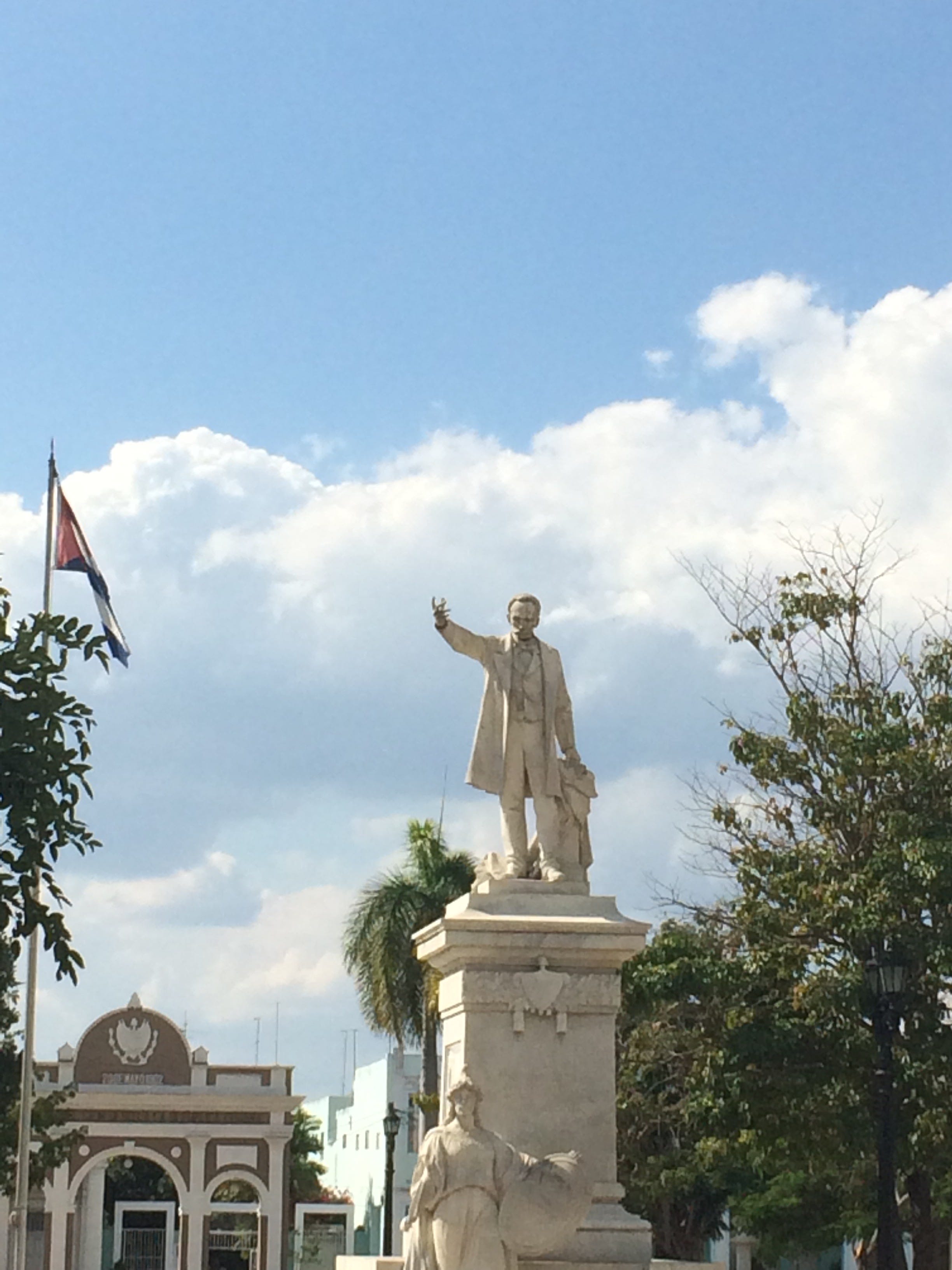
(The Havana statue of Jose Marti, the father of the Cuban Independence movement, and one of the most prolific writers in the Spanish language. Photo by Steve Villano, 2017)
Secretary of State Marco Rubio is on sort of a roll lately, if you don’t count the hundreds of thousands of human beings whose deaths he directly caused this year because he cut the guts out of USAID, which distributed $40 billion worldwide before Trump’s second term, for food assistance, medical care, training police and combatting drug trafficking, often to the most impoverished people on earth.
No, it wasn’t Elon Musk nor the DOGE dogs that did it, by Rubio’s own admission. Earlier this year, Rubio bragged to the Senate Appropriations committee, when questioned about who made the decision to eviscerate USAID’s life-saving work:
“The DOGE team didn’t do anything. I did it. I was the one who made the decision. I remember being in a hotel—I believe in Guatamala—going through line by line, spreadsheets of contracts that were cancelled.”
What kind of Secretary of State—other than Henry Kissinger, the last to be both Secretary of State and National Security Advisor 50 years ago—would pump himself up by proudly taking credit for the deaths of hundreds of thousands of human beings? What kind of human being does that, especially one who fashions himself as a devout Christian?
Since the beginning of his tenure in the US Senate 15 years ago, Rubio has wanted to be the head hombre hatching and crafting US policy in Central and South America—kind of a modern day John Foster Dulles (Eisenhower’s Secretary of State) and Allen Dulles (head of CIA and John’s brother) all in one; a kind of solo entrepreneur for American Imperialism in Latin America. He told Trump as much when the US Senate confirmed Rubio as Secretary of State by a 99-0 vote, on January 20, 2025. He was Trump’s first major appointment in his second term.
In an article in the January 12, 2026, New Yorker by Dexter Filkins entitled: “How Marco Rubio Went from Little Marco to Trump’s Foreign Policy Enabler,” Rubio’s worldview was ripped raw for all to see:
“For Rubio, who grew up among Cuban immigrants in Florida, hostility toward leftist governments in Latin America was kind of a birthright. As recently as 2023, he had warned of ‘the horrors occurring not far from our shores.’ People who knew him say that was not just rhetoric.
“He really believed that Venezuela, Argentina, Brazil and Columbia should be great countries and staunchly anti-communist,” a former US official said. Rubio has a special loathing for Nicolas Maduro, whose regime devastated Venezuela’s economy and sent millions of its citizens streaming out of its country.
As Rubio said at the time of Maduro’s capture (or kidnapping) by US forces on New Year’s weekend, Maduro was surrounded by Cuban intelligence officers, many of whom died in the US raid.
The New Yorker elaborates:
“Maduro was aided substantially by Cuban intelligence officers, who helped root out threats to his rule. As part of the alliance, Venezuela sent Cuba about 50,000 barrels of oil a day, propping up an otherwise desperate economy. In Florida, the expat community has long dreamed that if Maduro fell, his allies in Havana would follow.”
A former Florida politician who knows Rubio, painted a clear picture for the New Yorker of the emerging political landscape for Rubio:
“If Rubio took down Maduro and the regime in Cuba, he’d be a hero in Miami forever.” A successful intervention could also build support in his base for another run at the White House. “It’s part of the Rubio-for-President strategy,” said a former US official who worked in Latin America.”
The irony here, is that while Rubio spent time growing up in the midst of an authentic, and angry, West Miami community of “exiles” from “Castro’s Cuba,” his own family were not exiles, despite Rubio casually spreading that falsehood to get elected to the US Senate.
Rubio’s parent, Marco and Oriales Rubio, left Cuba in May,1956—more than two-and-a half-years before Fidel Castro came to power on January 1, 1959. They suffered under the right wing dictator and corrupt kleptocrat General Fulgencio Batista, who ruled the country with an iron fist from 1952 through 1958—when John and Allen Dulles handpicked Batista to protect US interests, and cooperate closely with the CIA’s teammates in Havana, Meyer Lansky and American Organized Crime.
It was Batista’s denial of fundamental rights and economic justice for the Cuban working people, and his lapdog-like fealty to the CIA and the Mafia—who paid him thousands of dollars per week to let them freely operate their drug, gambling and prostitution industries—that drove Rubio’s parents out of Cuba, seeking better economic opportunities—and drove many other Cubans, who remained in Cuba, into the arms of Revolutionaries seeking to liberate Cuba from the three-way stranglehold of US Intelligence, US economic and Mafia authoritarianism. To many Cubans, Castro was the second-coming of Jose Marti, who gave his life fighting for Cuba’s independence from Spain, their rulers who had kept Cubans in slavery until 1886.
In her detailed book on life in Cuba entitled Cuba: What Everyone Needs to Know (by Julia E. Sweig, 3r Edition, Oxford University Press, 2016), theauthor finds:
“By mid-decade (1950’s) US capital controlled over 40% of the Cuban sugar industry, 23% of all non-sugar industry, 90% of all telephone and electric service and 50% of Cuban railway service. Havana, long a tourist destination for Americans, experienced a boom in the sex and gambling industries, both of which were promoted by the American Mob…”
Under Batista, there was little concern giving for the average working family, forcing Marco Rubio’s parents to seek their “American Dream” in Florida, where generations of “expat” Cubans sought refuge and a better life, going back to the Spanish occupation of the Island, 100 years earlier. Rubio’s parents—Little Marco wasn’t born until 1971 in Miami—weren’t “exiles from communist Cuba,” as Senator Rubio often lied; they escaped from a corrupt, right-wing, Mob & CIA run government that served US and Mafia financial interests, and enabled Batista to amass a $300 million fortune (in 1958 dollars) when he fled to the Dominican Republic (with help from both the Mob and the CIA) when Castro came to power.
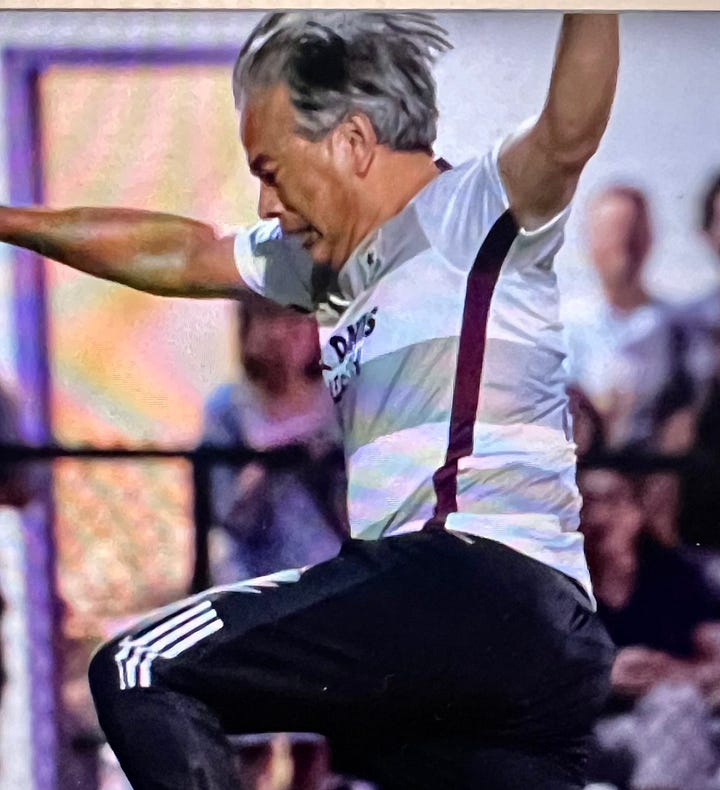
With the power and passion he put into his soccer goal kicks, CA Attorney General Rob Bonta has taken on the Trump Administration & Elon Musk, again and again, fighting for the Rule of Law.
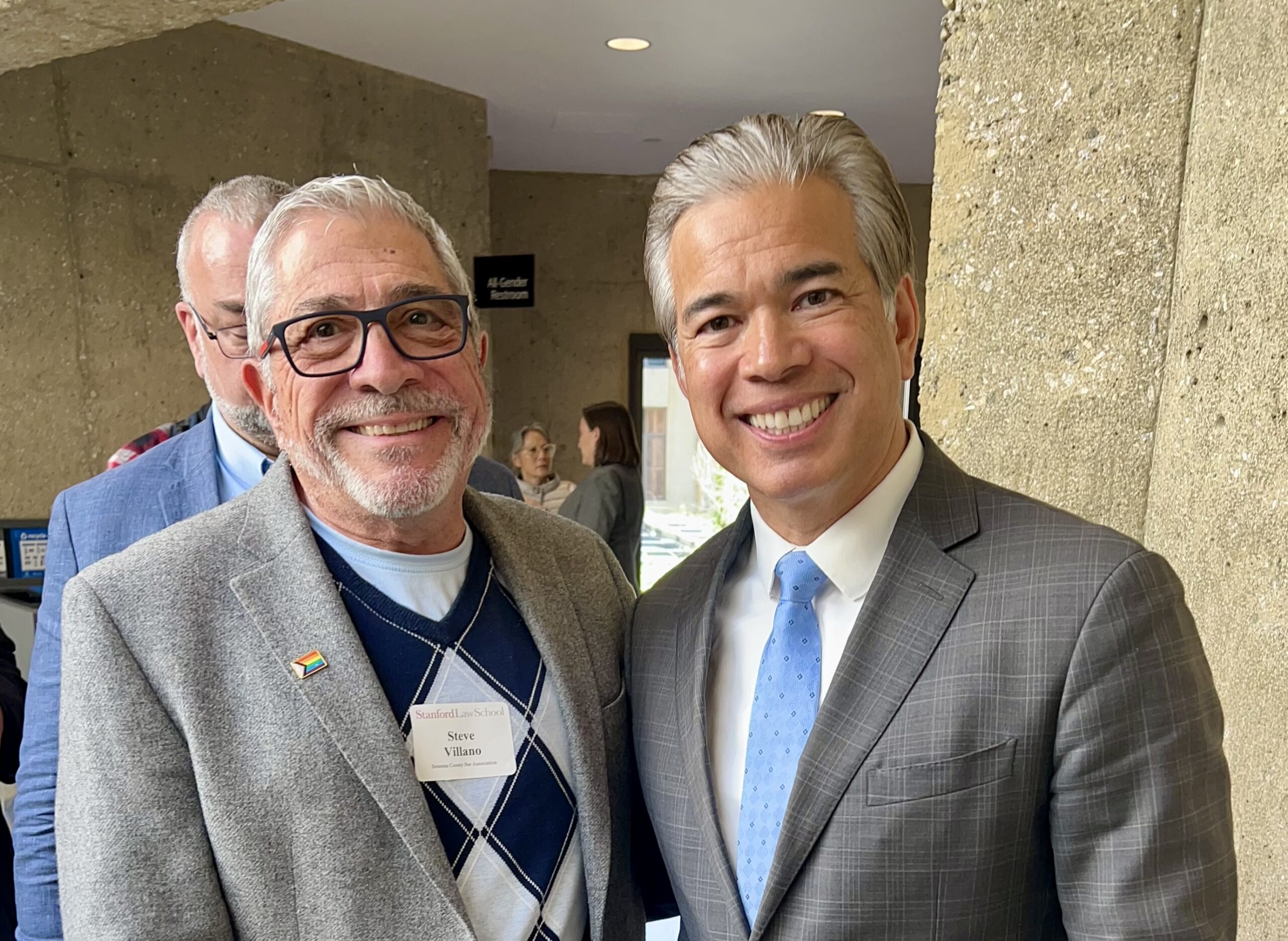
(AG Rob Bonta on the Soccer Field upper photo; and, below, at Stanford Law School (r.) with the author.)
I first met California’s Attorney General Rob Bonta about one year ago at legal symposium held at Stanford University Law School. His opening comments riveted my attention, and made me glad this former Captain of Yale’s Ivy League championship Soccer Team, was leading our State’s team to lash the illegal actions of Donald Trump’s gang to the nearest goalpost for the world to witness.
Coming one month after Trump was inaugurated President for the second time, an emergency gathering of legal minds and activists was convened by California State Senator Josh Becker. It was called: “New Administration, New Legal Landscape: Navigating Emerging Legal Issues Between California and the Federal Government, ” a stultified Stanford Law School-like title which understated the urgency of the moment.
Bonta lived and breathed that urgency of our“sudden death” circumstances. He had been meticulously preparing for it since Election Day, when Trump defeated former California Attorney-General Kamala Harris for the Presidency, and our nation’s Rule of Law and system of justice were set on fire.
Fearlessly, Bonta jumped right into the fray, the way he did on the soccer field in college when he played soccer for the Yale Bulldogs, and as a semi-pro, reminding us that he ran the second biggest Justice Department in the entire country, with an annual budget of $1 billion. He was immediately building our confidence for the battle ahead, and I was motivated by his coaching style—having played soccer for my high school team, whose nickname was also “the Bulldogs.”
“We’ve been preparing for this for a while, “ the Attorney General calmly said. “We will fight for and maintain the Rule of Law.”
Bonta began by noting that, as an infant, he and his his parents, escaped from the totalitarian, kleptocratic, lawless regime of Ferdinand Marcos, who put the Philippines under martial law in 1972, the year Bonta was born in Quezon City. From birth, he knew how fleeting democracy could be. Bonta and his parents—both political activists—fled the Philippines to a United Farm Workers headquarters facility near Keene, California—Nuestra Senora Reina de laPaz. Shortly after that, they moved to Fair Oaks, near Sacramento, where Rob Bonta grew into a stellar soccer star, and went on to become his high school’s valedictorian. He stood in front of the packed Stanford Law School classroom, like a tenacious coach rallying his team.
“I made a promise, “Bonta told us, “that we’d take Trump to court when he broke the law…It is non-negotiable, that you have to follow the law.”
He noted that the California Department of Justice—which had taken Trump to court 120 times during the first Trump reign of lawlessness, winning 2/3’s of the cases—immediately challenged Trump’s illegal 2025 “repeal” by Executive Order of the Birthright Citizenship provision of the U.S. Constitution.
Under Bonta’s leaderhip, California became one of the earliest states’s to challenge the illegal actions of Elon Musk’s “DOGE” and its professed right to access the private data information of all Americans.
“Someone who didn’t receive one vote,” Bonta said, referring to Musk, “shouldn’t have access to the private records of Americans.”
“Everyone must do everything they can to enforcde the Rule of Law,” Bonta repeated. “Federal law does not ‘trump” all other laws. The 10th Amendment gives States specific rights.”
Bonta inspired the team in front of him to never give up, underscoring that class action suits and Amicus Briefs filed by organizations could be very helpful to protecting and preserving the rule of law.
He looked at all of us squarely:
“After all,” he said, “We ARE friggin’ California.”
As of this month, January, 2026, Bonta’s California Department of Justice has filed over 50 lawsuits against the second Trump Administration, winning some 80% of those cases. Those lawsuits have resulted in preserving approximately $168 billion in federal funding for California and our 40 million citizen.
The most recent legal victory by California’s DOJ ended the federal deployment of National Guard troops in Los Angeles by the Trump Administration.
This week (January 15, 2026), Cal Matters reporter Nigel Duara interviewed AG Bonta about the State of California’s ongoing battles with the Trump Administratio
In late December, 2025, the U.S, Supreme Court sided with the State of Illinois in its effort to stop Trump from deploying the National Guard to Chicago to ratchet-up it’s terrorizing of another “blue” city and state. The court rejected the same arguments used by the Trump Administration to federalize and deploy the National Guard to Los Angeles, when protests erupted there.
“The government has not carried its burden to show that (the law) permits the President to federalize the Guard in the exercise of inherent authority to protect federal personnel and property in Illinois,” the unsigned order from the Supreme Court read.
The Trump Administration also withdrew its appeal of a federal court decision that the president could not keep the National Guard deployed in LA forever. That surrender was a clear victory for California Attorney General Rob Bonta, who had filed an amicus brief in the Illinois case.
“The law got developed in a way that will prevent what happened over the last six months from ever happening again,” Bonta said. “I think this door is closed to Trump.”
CalMatters: In terms of what California does next on this issue, is there anything that you all are doing in preparation for maybe (large-scale immigration raids) coming back, or perhaps an escalation in tactics like we’re seeing in Minnesota?
Bonta: We’re ready for anything. I think when you see incidents like we’re seeing in Minnesota, you have to assume that it could happen here in California.
You know, the Trump administration has made no bones about it. They are going after blue states and only blue states. And it’s political, it’s weaponization, it is partisan. They’re trying to own the libs and get the Dems. That’s their whole reason for being. And chief among them, the biggest state in the nation that has rejected Trump three times when he’s running, that sticks in his craw, he doesn’t like it.
CalMatters: In Los Angeles, I don’t recall them going door-to-door to, you know, to try and grab people like we’re seeing in Minnesota. Is this an escalation?
Bonta: I think they’re escalating. Minnesota shows it seems to be an escalation. I mean, there were some pieces that are the same, that are horrific and terrorizing and traumatizing and inappropriate, like removing license plates and being in a moving truck, pulling up to a Home Depot and having people run out of the back and all the profiling that was being done.
I think it’s an escalation, and they’re doing more. They’re really trying to hammer Minneapolis and Minnesota. It’s the home of the vice presidential candidate that ran against Trump, right? It’s the place where their racism is on full display with their attacks on Somalis.
CalMatters: What happened at the Supreme Court?
Bonta: The Supreme Court weighed in and basically said that the theory that the president had been operating on all along was completely unlawful and without foundation, truly a slap in the face and an embarrassing and devastating loss for Trump, who thinks he can always run to the Supreme Court and get what he wants.
And they followed the law, the law that we had argued always applied, and that there was no authority … to deploy the military, that the “regular forces” included the military forces. There was no analysis that they were unable to execute the law, and there was no authority for the military to be even executing any laws, given the Posse Comitatus Act (which prevents the president from using the military as a domestic police force). So it was really a devastating and shocking loss for Trump.
CalMatters: The 9th U.S. Circuit Court of Appeals allowed the Trump administration to deploy the National Guard in L.A. in June, but ruled differently six months later. The district judge’s rationale was that Trump couldn’t re-federalize troops indefinitely.
But does that indicate to you that if the material conditions on the ground in L.A. were to change, similar to what the Trump administration cited in June when they claimed protesters were committing violent acts against federal personnel and property, the Trump administration could authorize a new deployment? Is that your understanding, or am I wrong on that?
Bonta: I think you’re wrong, but I don’t think it’s an unreasonable thing to say, but let me just explain my thinking.
That case in L.A. in June was the very first one in the whole nation, and built into the exercise of authority of the federal administration here when it’s deploying the military is a great deal of deference. I think that deference was provided. It was the first case. There were mostly peaceful protests, but some violence, as you just mentioned.
It was the first time they were seeing what the Trump administration was doing here.
And then they saw it again in D.C. Then they saw it again in Portland, and they saw it again in Illinois. The judges saw what was happening, and they saw what’s being said, and saw the rationale, they saw how Trump said that Portland was a war zone when it was a peaceful city, they see how Trump says, ‘I’m going to bring the military in to do the very thing the Posse Comitatus Act prohibits, to enforce criminal law, because these blue cities are not cracking down on crime.’ Exactly what the military cannot do!
And so they saw what he was doing with the military and I think they got a sense of where this was really headed and what was happening here. … So now that the U.S. Supreme Court has said you make sure “regular forces” is military forces, you need to make a showing that all the military forces cannot stop the concrete block from being thrown, or stop the Molotov cocktail from being thrown – he’ll never be able to show that – then you can bring in the National Guard.
##
Right on the heels of the Cal Matters interview, AG Bonta demanded that Elon Musk “cease and desist from creating and distributing on his XAI platform “deepfake, nonconsensual, intimate images of child sexual abuse material (CSAM), noting that “the creation, distribution, publication and exhibition of Child Sexual Abuse Material is a crime.”
Earlier in the week, Bonta announced that his office was opening an investigation into the proliferation of nonconsensual, sexually explicit material produced using Musk’s Grok, an AI model developed by xAI, to facilitate the large-scale production of these images that are being used to harass women and girls acros the internet, including via Musk’s social media platform, X.
“This week, my office formally announced an investigation into the creation and spread of nonconsensual, sexually explicit material produced using Grok, an AI model developed by xAI. The avalanche of reports detailing this material — at times depicting women and children engaged in sexual activity — is shocking and, as my office has determined, potentially illegal,” said Attorney General Bonta. “Today, I sent xAI a cease and desist letter, demanding the company immediately stop the creation and distribution of deepfake, nonconsensual, intimate images and child sexual abuse material. The creation of this material is illegal. I fully expect xAI to immediately comply. California has zero tolerance for child sexual abuse material.”
Creating, disclosing, or publicizing digitized sexually explicit material portraying the depicted individual when the depicted individual did not consent to its creation or disclosure or was a minor when the material was created.
Facilitating or aiding and abetting the creation, disclosure, or publication of digitized sexually explicit material portraying the depicted individual when the depicted individual did not consent to its creation or disclosure or was a minor when the material was created.
Creating, facilitating, or aiding and abetting the creation, distribution, or publication of any image, including but not limited to digitally altered or artificial intelligence-generated matter, that involves or depicts a person under 18 years of age or what appears to be a person under 18 years of age engaging in or simulating sexual conduct.
Rob Bonta’s tough, no nonsense enforcement of the law against the criminal, unconstitutional actions of the Trump Administration and the illegal activities of Elon Musk, both within and outside of government, should come as no surprise.
Anyone who escaped from one lawless, corrupt dictatorship is determined never to live under another, and to do everything in his power to uphold the Rule of Law, protect democracy and the citizens of California.
If you want to inform the California State Attorney General’s Office of another sexually offensive image you’ve spotted on xAI, or some other platform, or wish to report abuses by ICE or violations of citizens rights and immigrant rights, please Contact: (916) 210-6000, agpressoffice@doj.ca.gov.
Eager to put his name on everything, Donald Trump just couldn’t resist showing of the chubby middle finger he may have used to penetrate E. Jean Carroll, which got a new Rape Law named for him.
He may not have won a Nobel Peace prize, or even been successful in shaking down one from a Venezuelan activist in exchange for making her President of her country after he kidnapped Maduro, but Donald Trump’s chubby middle finger—sometimes mistaken for his tiny, flaccid penis—DID accomplish something of note:
It got a State’s toughened-up Rape Law named after it.
After 12 years of failed attempts, New York State revised it’s Penal Code two years ago, with Governor Kathy Hochul signing the new law and declaring “Rape Is Rape,” expanding the technical legal definition of “rape” well beyond the old, parochial parameters of “vaginal penetration by a penis.”
And none of it could have been done without a hand from Donald Trump–or, more accurately, one of his teeny, chubby fingers and, what may or may not have been, a flaccid penis. The first jury of six men and three women in the May, 2023 E. Jean Carroll case vs. Trump, just didn’t want to touch that one.
Mere days after Trump was found guilty, again by yet another unanimous jury, for repeatedly sexually assaulting and defaming E. Jean Carroll to the tune of $83 million (on top of the $5 million he already lost to her) New York State moved its Rape Law into the 21st Century and into compliance with federal law, practice, and most modern law-enforcement definitions of rape.
The new law—popularly known as, “The Trump Middle Finger Rape Law,” broadens the definition of “Rape” to include nonconsensual anal, oral and vaginal sexual contact. That means that whether the perp forcibly uses his or her fingers, a sex toy, a baton or anything else, or his penis in any penetration of a vaginal, oral or anal opening—on a woman or a man—the sex offender is guilty of rape. Voila! Enter (ewwww) Donald Trump’s fat little middle finger, which he flashed for all the world to see in Detroit, Michigan this week.
New York State’s new definition of rape makes it comport with Federal standards, including those of the FBI, whose Uniform Crime Reports define rape as:
“penetration, no matter how slight, of the vagina or anus with any body part or object, or oral penetration by a sex organ of another person, without the consent of the victim.”
Ironically, that change in the FBI’s definition of what constituted rape, was made in 2012, during the tenure of then-FBI Director Robert Mueller. No wonder why Trump never liked him.
New York’s new rape law is also consistent and with the practices of the Rape, Abuse, Incest National Network (RAINN), which used to operate the Department of Defense’s SAFE Helpline, and worked in partnerships with over 1,000 local sexual assault service providers across the country.
In signing the new rape bill into law, Governor Hochul said that what happened under the old law was that “physical technicalities confuse jurors and humiliate survivors and create a legal grey area that defendants exploit.” Especially, when their pudgy little fingers are no bigger than their Angry, Nasty Little Inch.
It’s precisely the kind of “sex-ploitation” that the convicted sex offender Trump did in his first losing trial against E. Jean Carroll in May, 2023.
In describing Trump’s sexual attack on her, Carroll carefully told the Federal civil jury in 2023 that Trump forcibly inserted several fingers and his penis into her vagina, after pushing her up against a wall, and pulling down her tights. It was the same detailed description of rape she had repeatedly recounted for decades, under oath, and in print.
During that trial, the jury concluded, that Trump had “deliberately and forcibly penetrated Ms. Carroll’s vagina with his fingers, causing immediate pain and long lasting emotional and psychological harm,” findings which led to their $5 million judgment in Carroll’s favor, $2 million of which was awarded as compensatory damages because of the brutal sexual assault committed by Trump.
Yet, despite Carroll’s sworn testimony that he also penetrated her with his penis, the Jury, for some bizarre reason, found Trump’s penis to be no more than another one of his teenyfingers, dismissing Carroll’s under oath, first-person account, as if they were, somehow, in the Bergdorf’s dressing room watching Trump’s sexual attack unfold.
That distinction—between Trump’s chubby little fingers or his penis—under the old New York State Penal Law was enough for the sex offender to escape the previous “vaginal penetration by a penis” technical requirement for rape.The Jury just couldn’t tell Trump’s penis from his teeny fingers.
US District Court Senior Judge Lewis Kaplan—who saw and heard the exact same evidence in that first case–was outraged over the jury’s jerry-rigged verdict on the question of rape, and he said so, several times. Writing immediately following the 2023 verdict, Judge Kaplan said quite clearly:
“Indeed, as the evidence at trial recounted makes clear, the jury found that Mr.Trump in fact did exactly that.” (Rape Ms. Carroll).
Judge Kaplan—who also presided over E. Jean Carroll’s second defamation case against Trump, in which she won an $84 million award— declared that the jury in the first case, based their decision on, as Newsday reported (January 30, 2024):
“the narrow, technical meaning” of rape in New York penal law and that the verdict did not mean that Carroll “failed to prove that Mr. Trump ‘raped’ her as many people commonly understand the word ‘rape.’”
In August, 2023, only a few months after Trump was convicted of being a sex offender, Judge Kaplan dismissed a defamation counter-claim by Trump against Carroll, where he whined that she defamed him by writing in a magazine article and later in her 2019 book, What Do We Need Men For?: A Modest Proposal, that Trump raped her.
USA Today, reported in a January 29, 2024 story entitled “DidDonald Trump Rape E. Jean Carroll? Here’s what a Jury and Judge Said,” questioned why the jury accepted only part of E. Jean Carroll’s story of Trump’s criminal sexual attack on her:
“The jurors weren’t required to explain why, under the definitions they were given, they concluded Trump sexually abused Carroll but were less convinced he raped her.
However, in analyzing the jury’s verdict, Judge Kaplan said Carroll’s testimony about penetration by fingers was more “repeated and clear.” She said she “couldn’t see anything that was happening,” although she could feel it, describing the pain from his finger in particular. She testified that she wasn’t sure if he got his penis fully or only partially inside her.”
In Kaplan’s judgment, “full” or “partial” penetration wasn’t the issue: any penetration of the vagina by Trump’s penis, no matter how small, was enoughto trigger the definition of rape, even under the old law. If the jury did not believe Carroll’s sworn testimony of penile penetration, then why did they award her $2 million in compensatory damages for the sexual assault? As a consolation prize?
As excruciatingly painful as it was for E. Jean Carroll to experience this horror initially, and then to have to relive it over and over during her trials and many times after, under the old, out-dated New York State rape law, the serious felony of rape came down to the question of whether or not Trump’s penis could be confused for his teeny, chubby fingers.
Under the New York State’s “Trump Middle Finger Rape Law,” penis size and depth or means of penetration is no longer, thankfully, a matter for a jury to measure.
But by flagrantly wagging his middle-finger at the world in Detroit this week, Trump triumphantly displayed his pride in having a new, broadened legal definition of Rape named after the dumpy little digit, that was mistaken for his manhood.
Both mothers, both Christian activists, both White women under 40 who could not be silent in the face of injustice. Both shot dead; both slimed by their government with lies saved for strong women..
(Renee Nicole Good, shot in head by ICE agent; Viola Liuzzo, shot in head by KKK killers.)
The moment the news exploded about an ICE agent firing three-bullets into a Red maroon Honda Pilot and killing its’ driver, 37-year old Renee Nicole Good, Minneapolis mother of three, my mind leapt back 61 years and I thought of Viola Liuzzo.
Viola Liuzzo, 39-year old Detroit mother of five, Unitarian Universalist activist for peace and justice, shot dead twice in the head in her 1963 Oldsmobile, which she was driving from Montgomery, Alabama back to Selma, on the night of March 25, 1965, shuttling civil rights workers back to where they began an historic 50 mile march a few days earlier.
Both Good and Liuzzo did not have to be where they were, but their powerful commitment to their faith and to humanity compelled them to be there, where human dignity and human rights were on the line.
The flimsy, fraudulent cardboard Catholic JD Vance, who disagrees with Popes Francis and Leo on every fundamental teaching of Jesus about love, blamed the point-blank shooting of the young mother who had just dropped off her 6-year old son at school for her own death: “It’s a tragedy of her own making,” Vance said, lying that she was a “woman who aimed her car at a law enforcement officer.”
Back my brain raced to Viola Liuzzo, who, when her Teamster business agent husband told her that the Civil Rights battles in the South in 1965 were’t her fight, responded, that they were everyone’s fight. Moved by a series of “Bloody Sunday” marches in Alabama led by John Lewis across the Edmund Pettus Bridge in Selma, to the State Capitol in Montgomery— and by the murder at one march of a 38-year old Unitarian Universalist Minister from Boston, James Reeb—Liuzzo believed she had a moral responsibility to take action.
Less than a week after President Lyndon Johnson’s powerful March 15, 1965 speech to a joint session of Congress calling for passage of the Voting Rights Act, Liuzzo hired a nanny to watch her children while she headed south to join the marchers. The FBI, led by J. Edgar Hoover, slandered her for “abandoning her children” being “sexually promiscuous,” and “bringing it upon herself.”
Just as ICE, the Department of Homeland Security, and the entire Trump Administration lie repeatedly to cover-up their lawless, para-military immigration operation which has killed and arrested U.S. citizens with impunity as well as non-citizens, Hoover’s FBI had a specific reason to spread vicious lies about Viola Liuzzo: one of the four white men, in the car of Klansmen which murdered her and attempted to murder a male, Black civil rights worker driving with her, was undercover FBI agent, Gary T. Rowe. Hoover was obsessed with whitewashing that fact, and the truth the FBI agent did nothing to stop the pre-planned, pre-meditated murder from happening.
In the biography of Liuzzo, entitled From Selma to Sorrow: The Life and Death of Viola Liuzzo, author Mary Stanton wrote carefully about what happened after Liuzzo and Civil Rights worker Leroy Moton dropped five fellow marchers off at Selma Airport, and were headed back toward Montgomery:
“Between the airport and Selma a car full of whites drove up behind them and banged into the bumper of her Oldsmobile, several times before passing…Further along, the driver of another car turned on his high beams and shined them into Liuzzo’s rear view mirror. They followed her car for 20 miles…She attempted to outrun her pursuers by singing “We Shall Overcome” at the top of her lungs..Halfway between Selma and Montgomery the four men in the second car (including FBI Agent Rowe), pulled their car next to her’s. They shot at her (two bullets hit her head) and she was killed instantly. Her car crashed into a ditch. Moton escaped.”
The FBI and Hoover went into full cover-up and smear campaign mode, calling Liuzzo a “communist,” “drug addict”, and a “neglectful mother.” The facts about the FBI’s smear campaign were not revealed until 13 years later, under a Freedom of Information Act request.
The Washington Post’s Donna Britt wrote about it in 2017, in an article entitled “A White Mother went to Alabama to Fight for Civil Rights: The Klan Killed her for it:”
“Hoover charged that the cuts on Liuzzo’s arm from the car’s shattered window were signs of ‘recent drug use.’ and that her proximity to Leroy Moton in the car (a car that was transporting five other people to the airport) resembled “a necking party.”
Hoover spread those lies knowing that the autopsy of Liuzzo revealed no traces of drugs, nor indicated any traces of having had sex before she died. Like Noem, and Vance, and Donald Trump, J. Edgar Hoover simply made things up to cast a shadow of blame and shame on the female victim, accepting no responsibility for what their official negligence allowed to happen.
Singing from Hoover’s hymnal of hate and distraction, Trump Administration officials and their culpable, off-key chorus have repeatedly tried to blame Renee Nicole Good for her own death, and worse. Noem, Vance and Trump all accused Good of of being a “Domestic Terrorist,” and a “deranged Leftist,” despite her Christian upbringing, her birth in the conservative Air Force town of Colorado Springs, Colorado, and her first marriage to a military veteran, with whom she had a son. The young son’s father died two years ago.
Fox News flunkies like Jesse Waters attacked Good’s personal life pointing out that “she used pronouns in her bio,” and she leaves behind “ a Lesbian partner and a child from a previous marriage.”
Michelle Goldberg writes in the January 8, 2026 New York Times that:
“Fox News sneered that Good was a “self-proclaimed poet—(she was the winner of a prestigious poetry award)—with “pronouns in her bio.” Conservative radio host Erick Ericson described her as an AWFUL—Affluent White Female Urban Liberal.”
In truth, the insecure men of the Trump Administration, like J. Edgar Hoover’s FBI, could not permit strong women to make them look weak. Liuzzo’s daughter Mary, who was in the 10th grade when her mother fought for civil rights in Alabama, told the Washington Post’s Donna Britt, that her mother was “a wonderful human being who loved every living creature.”
Using almost the identical words, in a January 10, 2026, New York Times story entitled “Who Was Renee Good, the Woman Killed by an ICE Agent in Minneapolis?”, Renee Good’s wife, Becca, told the Times that Renee was “A Christian woman, who believed in loving others as well as nurturing kindness in people…She was made of sunshine.”
The world was exposed to Good’s kindness and “sunshine,” when a video taken by her killer, ICE Agent Jonathan Ross, recorded her saying to him, with total sincerity and a smile, “That’s fine, Dude, I’m not mad at you.”
Viola Liuzzo’s daughter Mary told the Washington Post who her mother was:
“She actually believed it when Christ said that the suffering and needy are OUR people. Mom saw ALL human beings as her people.”
So did Renee Nicole Good.
And, as the Washington Post’s Britt wrote, that was what was so threatening:
“Viola Liuzzo was a woman…and white. She was cute. She was a mom. Suddenly, I knew the monsters could kill anyone.”
In his final report to the attorney general, special counsel Jack Smith stood behind his decision to criminally charge President-elect Trump for his efforts to overturn the 2020 election. Smith detailed the evidence he and his team amassed and would have presented at trial, writing “the admissible evidence was sufficient to obtain and sustain a conviction at trial.” William Brangham reports.
Read the Full Transcript
Notice: Transcripts are machine and human generated and lightly edited for accuracy. They may contain errors.
Amna Nawaz:
In his final report to the attorney general, special counsel Jack Smith stood behind his decision to criminally charge president-elect Trump for his efforts to overturn the 2020 election.
In the 137-page report, Smith again detailed the evidence that he and his team amassed and would have presented at trial, writing — quote — “But for Mr. Trump’s election and imminent return to the presidency, the office assessed that the admissible evidence was sufficient to obtain and sustain a conviction at trial.”
The report was written before Smith resigned from the Department of Justice last week.
Our William Brangham has been following all the criminal investigations into the president-elect and joins us now.
So, William, this is Jack Smith saying he’s confident that he could have convicted Trump, but he was blocked by this longstanding DOJ policy that prohibits the prosecution of a sitting president. What else did he have to say in the report?
William Brangham:
That’s right, Amna.
We should also say, federal prosecutors always say, as a general rule, that, if we could have gone to trial, we would have been able to convict the defendant. I mean, federal prosecutors, by their nature, do not indict people they do not have a great deal of confidence that they could win against.
But, that said, this report is really a summary and a sort of encapsulation of all the evidence that his indictments have shown over the last year. There’s nothing really new in here. They’re simply alleging that Donald Trump knew that the 2020 election was lost, that Joe Biden beat him, that there was no widespread fraud, and that he refused to accept those results.
And Smith writes; “Trump then engaged in an unprecedented criminal effort to overturn the legitimate results of the election in order to retain power.”
And this report, those many, many pages detail all the ways that we have talked about over the past year that Trump allegedly unlawfully tried to stay in power. That was pressuring state and local elections officials. That was pressuring Department of Justice officials.
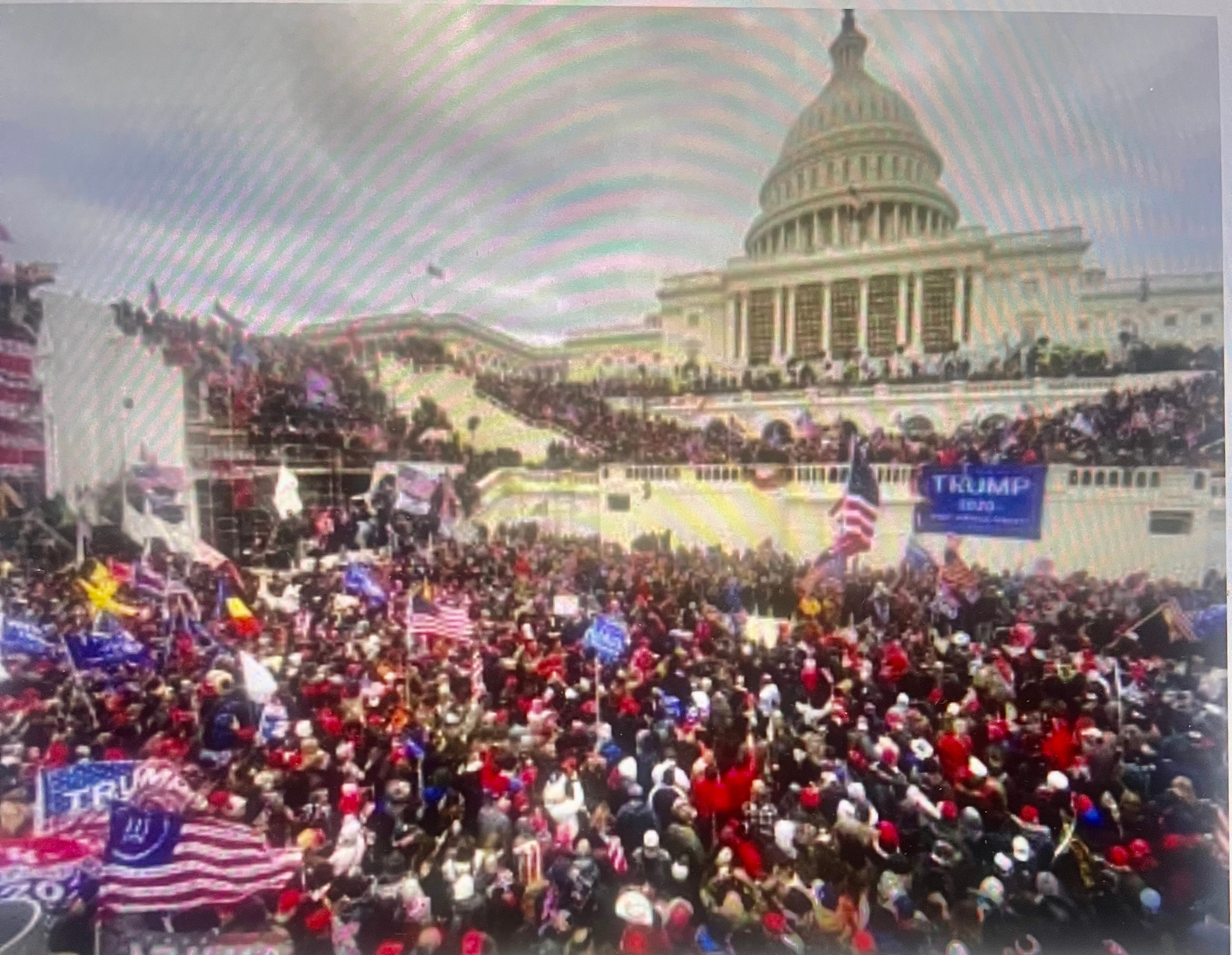
That was creating this fake electors scheme, pressuring Mike Pence, culminating, of course, with what Smith alleges was, Trump’s campaign of lies of a stolen election is what drove that violent horde into the Capitol on January 6, where 140 law enforcement officials were savagely beaten and attacked.
And, again, as you said, Jack Smith says all of that evidence, if I had been able to present it in court, would have been persuasive. But because Trump won and the DOJ doesn’t prosecute a sitting president, that case and all of that evidence got dropped.
Amna Nawaz:
And, William, Mr. Trump tried to block this report from coming out, from being released. Last night, he criticized that release. He called Jack Smith a lamebrain prosecutor.
And all along, Donald Trump has basically alleged this was a political Democratic effort led by President Biden to, in his words, weaponize the Justice Department against him. Did Jack Smith address any of that?
William Brangham:
Yes, he did.
In fact, he reiterated this quite a bit in his report. Smith goes to great lengths to reject that allegation, writing — quote — “Nobody within the Department of Justice ever sought to interfere with or improperly influence my prosecutorial decision-making.”
Smith writes throughout that the decision in this case, in all of them, was his and his alone. He writes: “The ultimate decision to bring charges against Mr. Trump was mine. It is a decision I stand behind fully.”
On the issue that President Biden himself was somehow the puppet master in all of this, Smith says: “For anyone who knows me, they know that that idea is, in a word, laughable.”
Amna Nawaz:
So, William, this report covered the January 6 investigation, but there was another investigation by Jack Smith that was into Mr. Trump’s alleged mishandling of classified documents at his Mar-a-Lago estate. That is not in this report. Will we ever see that volume?
William Brangham:
That volume, it’s complicated.
That case, as you remember, was dismissed by the judge, that she argued that Jack Smith was improperly appointed to his position. That report has been written. It is with the Department of Justice, but the department has said they’re not going to release it publicly at least until the cases involving two of the other defendants in that case are finished.
So maybe we will see it. We don’t know. It won’t be any time soon.
Amna Nawaz:
All right, our William Brangham, thank you so much.
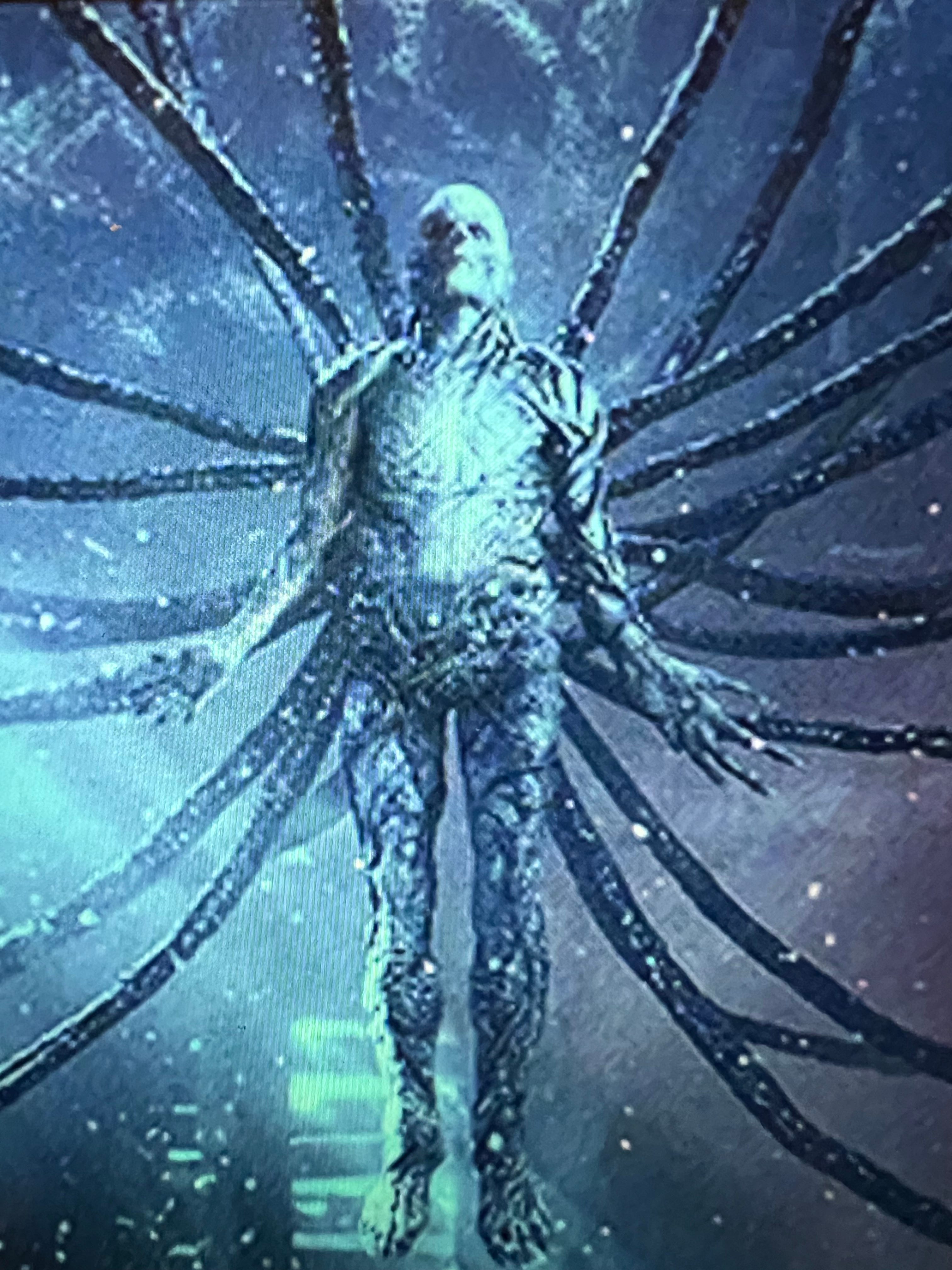
Like Vecna, the evil villain in “Stranger Things,” Trump pretends to sleep, while terrorizing the world, and sucking all the oil, gold, money and life out of humanity.