Why Mario Cuomo Did Not Run for President.

A new documentary film entitled “Mario” premieres at the Tribeca Film Festival next week. I had a front-row seat observing Mario Cuomo for 8 years, and my unedited film still runs in my mind.

Steve Villano

May 30, 2026

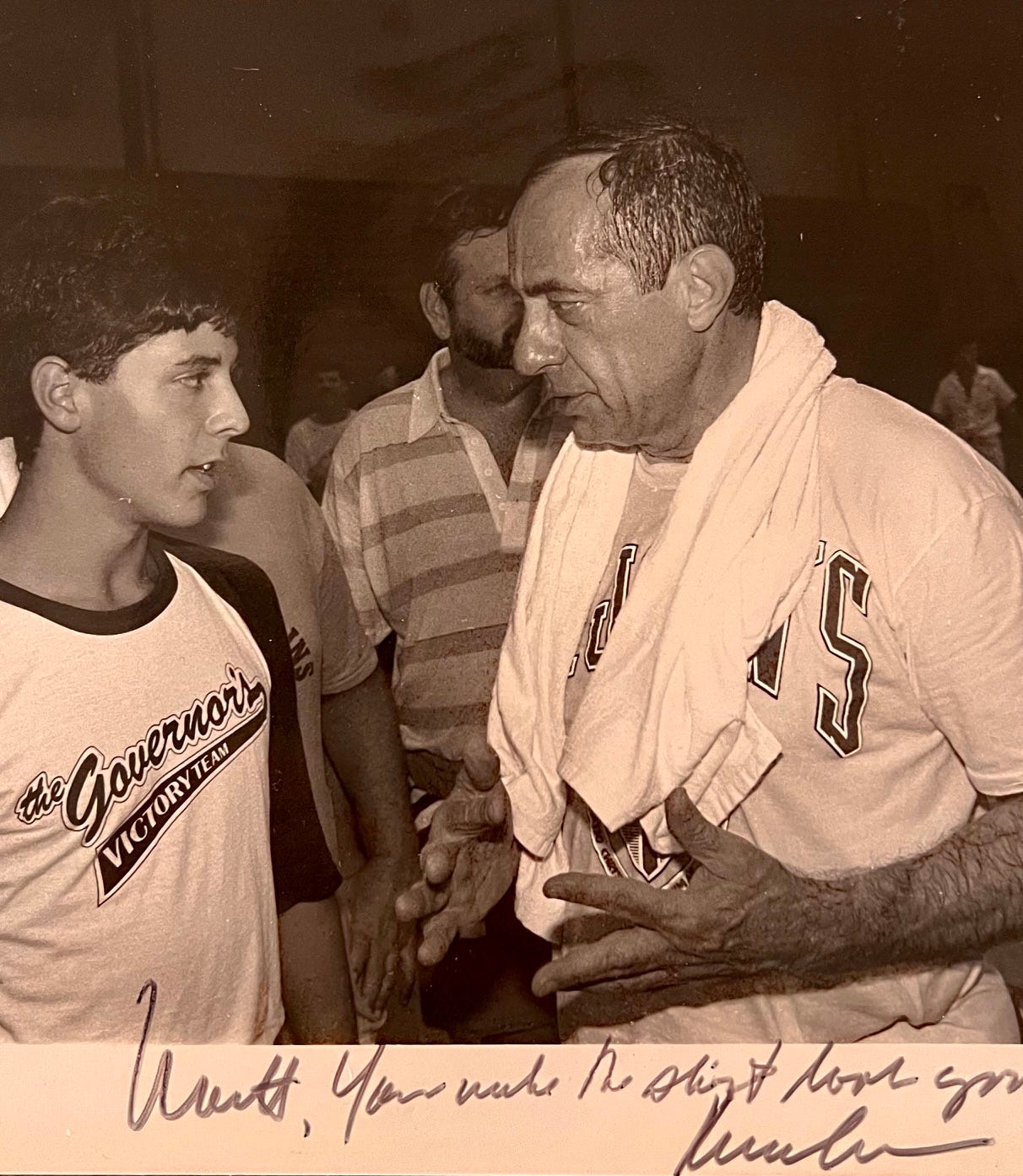
(Mario Matthew Cuomo, r., speaks with my son, Matt Villano, following an exhibition basketball game in 1990; the inscription on the photo says “Matt, You make the shirt look good!” (photo by Ted Kaplan).

The brilliant Kunhardt Film Family—father Peter W, and son’s Teddy & George—have produced the first, first-rate documentary about former New York State Governor Mario Cuomo debuting at the NYC’s Tribeca’s Film Festival on June 4, 2026, at the School of Visual Arts (SVA) in Manhattan.

The multiple Emmy Award winning family film team—which has made many HBO Original documentaries— has a long and superb track record of making movies that matter about individuals who have had a positive impact on improving our lives. Their filmography includes docs about transformational leaders like Barack Obama, John McCain, Gloria Steinem, and the Founder of the Equal Justice Initiative, Bryan Stevenson. This new film, entitled “Mario” fits squarely into that genre.

We are trying to make moral leadership the core of many of the films we do,” said Peter W. Kunhardt, now 73, who founded the Kunhardt Production Company in 1987 (now Kunhardt Films) with his father, Philip Kunhardt, Jr., and his brother, Philip Kunhardt, III.

The Kunhardt family, which dates back to Peter’s great-great-grandfather who was a Major in the Union Army in the Civil War; his great grandfather Historian Frederick Hill Meserve; and his grandmother Dorothy Meserve Kunhardt, who wrote the classic children’s book, Pat the Bunny, merits an HBO documentary about their own unique place in U.S. history. Peter Kunhardt himself—not to be confused with his son Peter, Jr., who has run the Gordon Parks Foundation for the past 15 years—worked on ABC News “20/20” for a decade before founding the family film company in 1987.

“What we are really after is the kernal of character who is universal, whom people can identify with, which is the driving force within someone,” Peter Kunhardt told Westchester Magazine (November 18, 2018, “Reel to Reel,” by Gale Ritterhoff’).

The Kunhardt’s could not have found a more fitting person to apply their storytelling knack to for “moral leadership,” than Mario M. Cuomo, whose unshakeable sense of values, integrity, morality and personal purpose was the focus of my book “Tightrope: Balancing a Life Between Mario Cuomo & My Brother (Heliotrope Books, NY, 2017) I have since published a number of articles profiling Mario Cuomo as the “Anti-Trump.” One such story appeared in the Albany Times Union at the time of Trump’s first Inauguration in January, 2017. Link here: http://socialvisionproductions.com/2017/mario-cuomo-the-anti-trump/

I wrote the book (and many subsequent articles) because I became increasingly infuriated when I was asked at weddings, Bar Mitzvahs and every event where people knew I worked with Mario Cuomo, if it was true that Cuomo opted out of running for President because he had “mob connections.” Time after time, that thoughtless comment triggered me, and I transformed into the skunk at many “garden parties” by pugnaciously retorting “you wouldn’t ask that question if his name didn’t end in a vowel.”

I decided it was time for me to tell the story as only I could: that I knew from first hand experience that Cuomo had NO mob connections, because I did, and that my brother’s mob associates, considered Mario Cuomo “untouchable,” because of his impeccable integrity. Then, when people asked again, I could simply say, “Read my book,” and walk away from them, with my temper a bit more in check.

In Tightrope, (pages 118-120) I detailed my first-hand observations of the moment, in my judgement, that I knew Mario Cuomo would never run for President:

“ In early September, 1986, the Governor was already in a testy mood. His re-election, vb was never in doubt, but he was no longer having fun. The press, led by the New York Post,was pummeling (his son) Andrew’s law firm for allegedly doing business with State agencies, and for accepting clients who were seeking to curry favor with the Governor by hiring a law firm in which his son was a partner.

Halfway to the speaking event we were headed for (I sat in the unmarked State Trooper’s car directly behind the driver) the car phone rang. It was Andrew. I watched Mario Cuomo pick up the phone and listen quietly to his son for several minutes, deeply massaging his forehead with the large hand that wasn’t cradling the phone to his ear. Suddenly, the Governor staeted shouting into the receiver.

What do you mean you’re a liability to me? What kind of talk is that? You’re tired, you’re working too hard on this campaign and you need some rest. Don’t let me hear you talking like that,” Mario Cuomo said to his oldest son, slamming down the car phone into it’s cradle.

There was complete silence in the car for a few moments. Finally, the Governor spoke, seething with anger.

Imagine that. My own son, thinking he’s a liability to me. This is some god-damned business,” Mario Cuomo said. “You go into government because you try to do some good, and what do they do? They attack your kids. They spread rumors that somehow you must ne connected to the Mafia because your name ends in a vowel. And for what? All because you want to serve? At what price? And when did my kids ever agree to pay the price.”

I watched him look out of the passenger-side window of the black, unmarked State Police car, his anger barely contained and knew at that precise moment that Mario Cuomo would not run for President of the United States; he would never subject his children to the brutality of a Presidential campaign.

Ah, the whole thing stinks,” Mario Cuomo said, waiving his right hand as if chasing away a fly, swatting his frustration into the air; brushing away the stench of stories which hurt his son and his family, and gagged him. With one wave of his large hand, he pushed aside any of the tightly reasoned arguments being advanced in favor of a “Cuomo for President” campaign in th next (1988) Presidential election.

“Mario Cuomo understood how news, rumor & innuendo worked better than any American politician of his time. He knew that a story, no matter how far-fetched, took on a life of its’ own, once reported and repeated. . .The damage was often subliminal, a mere suggestion to a jury quickly withdrawn, and it became impossible to erase from public consciousness despite detailed rebuttals or outright denials. All that was necessary for the phony charge to pass for fact, was for it to be repeated over and over again, until it became one with the Cuomo name, indivisible.

Above all, he would not allow his children to be maligned by anyone or used as props in the no-holds barred media reality show which political campaigns were quickly becoming. His family had not asked for a life in public service; he had, and he would stand as a bulwark against their being bullied. I loved him for leaping to Andrew’s defense, and admired his certainity in being an unflinchingly protective father.”

In the Tribeca Film Festival synopsis that accompanies the information about the Kunhardt’s documentary “Mario,” one line jumps out and underscores the truth I observed first-hand over eight years:

“As he finally ends his political life and turns more deeply to family, Cuomo’s story is more than just one of leadership, but one of love, empathy and commitment to service that goes beyond a chronicle of political life.”

Only a multi-generational film-making family like Peter Kunhardt’s, with deep roots in American history, a passion for moral clarity, a track-record of uncovering universal “kernals of character” and with a fierce loyalty to those they love, could do justice to telling the story of the humanity of Mario Cuomo.


I Spit on You from My Father’s Grave.

Everything about Trump and his fanatical followers makes a mockery of the things our fathes, our brothers, and ourselves carried to war and home.

Steve Villano

May 25, 2026

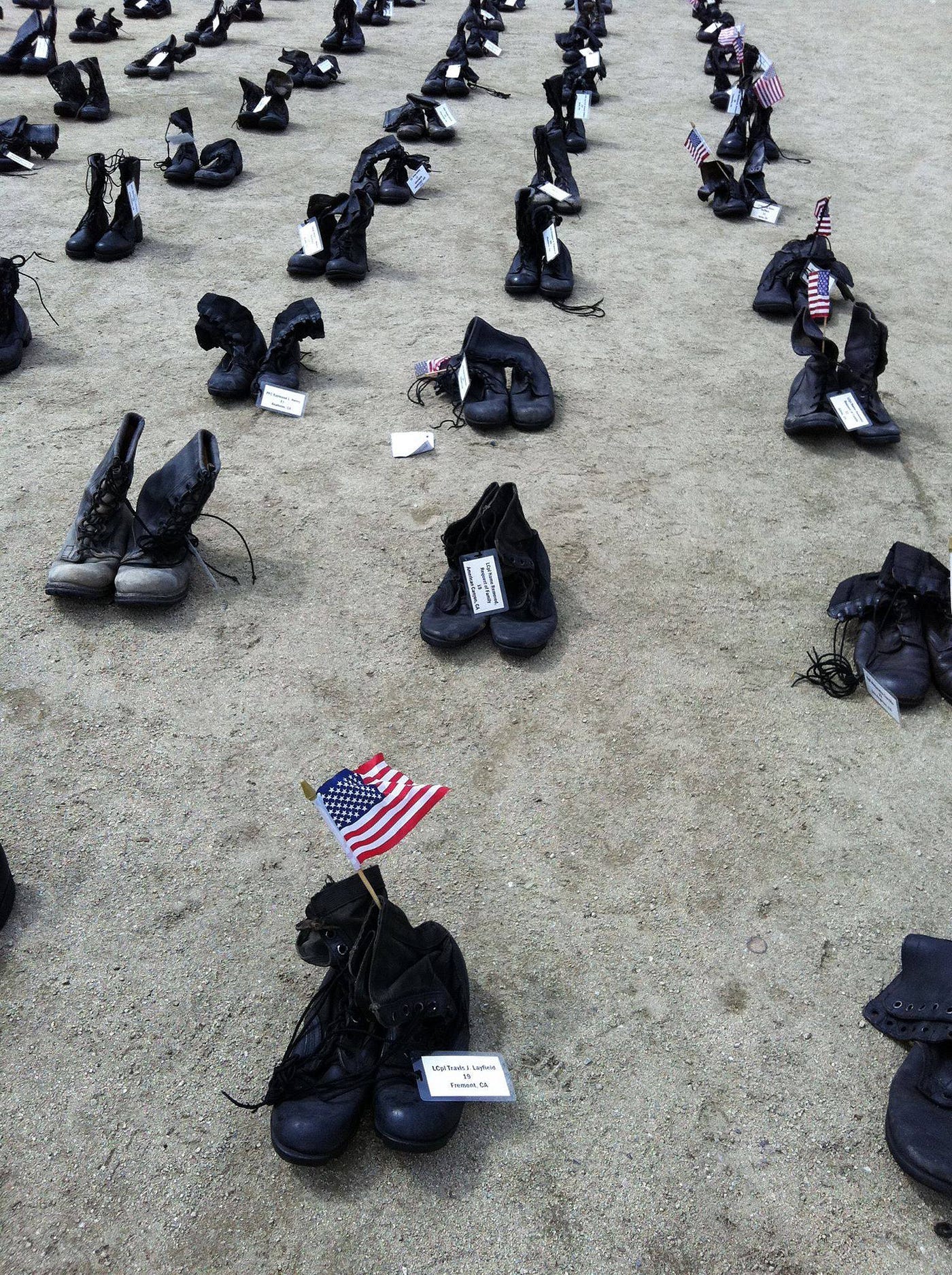
(Photo by Steve Villano, in front of City Hall, San Francisco)

My father was an Anti-Fascist,

A child of immigrants

who worshipped free elections,

And not some flaccid erections of impotent potentates,

Who pump themselves up

On the deaths of humans and institutions great,

Unlike themselves.

My father curses you from his grave,

You bottom-sucking losers, depraved

Beyond redemption, not to mention how

Deprived you are of any shards of soul,

You democracy desecrating terrorists,

Humanity’s black holes.

My father didn’t want to leave three kids

But yet he did, to fight the Fascists and keep

Us safe from hate-filled fanaticism, intent

On killing mothers & babies, and tearing them apart,

Brutally separating families, for sport, & lack of heart.

My wife’s uncle, at 20, had reasons plenty to stay home

And not run off to Rome, to spend his youth fighting Nazis

So grotesque they pissed on Jewish graves, including his own,

Dug deep into Europe’s hills, before The War was won.

And now, you whine, you feces-smearing Trumpholes,

White faces contorted into masks of hate, and vicious howls,

Tearing down the delicate democracies Veterans’ blood sealed,

Defeating & containing destroyers like you for 75 years,

You chin-thrusting shills for criminals & cretins, you pig squeals.

My father and his fellow GI’s curse you from their graves,

You fucking, insane, deranged inanities,

Depraved more than the jackals

Who eat the entrails of dead soldiers, children and civilians,

Growing fat, feasting on the flesh of others, sisters, brothers,

In the crassness and crapulence of your full inhumanity.

The soldiers of freedom’s fortune, here and abroad,

Curse you from their graves, you failures, knowing the courage of their brave

Friends who, of all colors and faiths, came together for a cause,

Not simply for applause, revenge, nor profit, but to save the world,

From avaricious, hate-dripping, garbage pails like you.

My father fought the Fascists,

As did 300,000 fellow US Vets who perished,

And 700,000 more who bore bullets in their spines & rumps,

Fighting to save Democracy from soul-less, anti-human terrorists,

Storming the halls of Congress, Kristallnacht every night,

Taking orders from tyrants, like Orban, Hegseth & Trump.

My father, a Veteran of a foreign war,

Anti-Fascist, anti-racist, memorialized for his love,

Of family, of life, of the struggle it takes to survive,

Who believed fighting inhumanity everywhere,

Would keep us safe, forever, here,

Would keep us free, protected and alive.

Don’t mouth the words of memory when you have none;

Don’t invoke their struggle when you’ve not known one;

Don’t wave some jingoistic flag under which he fought,

Don’t think his sacrifice is something that can be bought.

I spit on you from my father’s grave,

And the burial grounds, of the poor, like him,

Fertilizer for rich men’s wars,

Plowed under for patriotic reasons, long ignored,

While you fake love for what’s free and brave,

For power, and for profit, and because, because…

You never learned how to behave, like a human.

Does My Judaism Still Exist?

Israel has changed dramatically since 1980, lurching toward a Far Right, Fundamentalist, Ultra-Nationalism. Does the Judaism to which I converted 46 years ago still exist?

Steve Villano

May 22, 2026

I am a Jew.

I speak for no other Jews but myself.

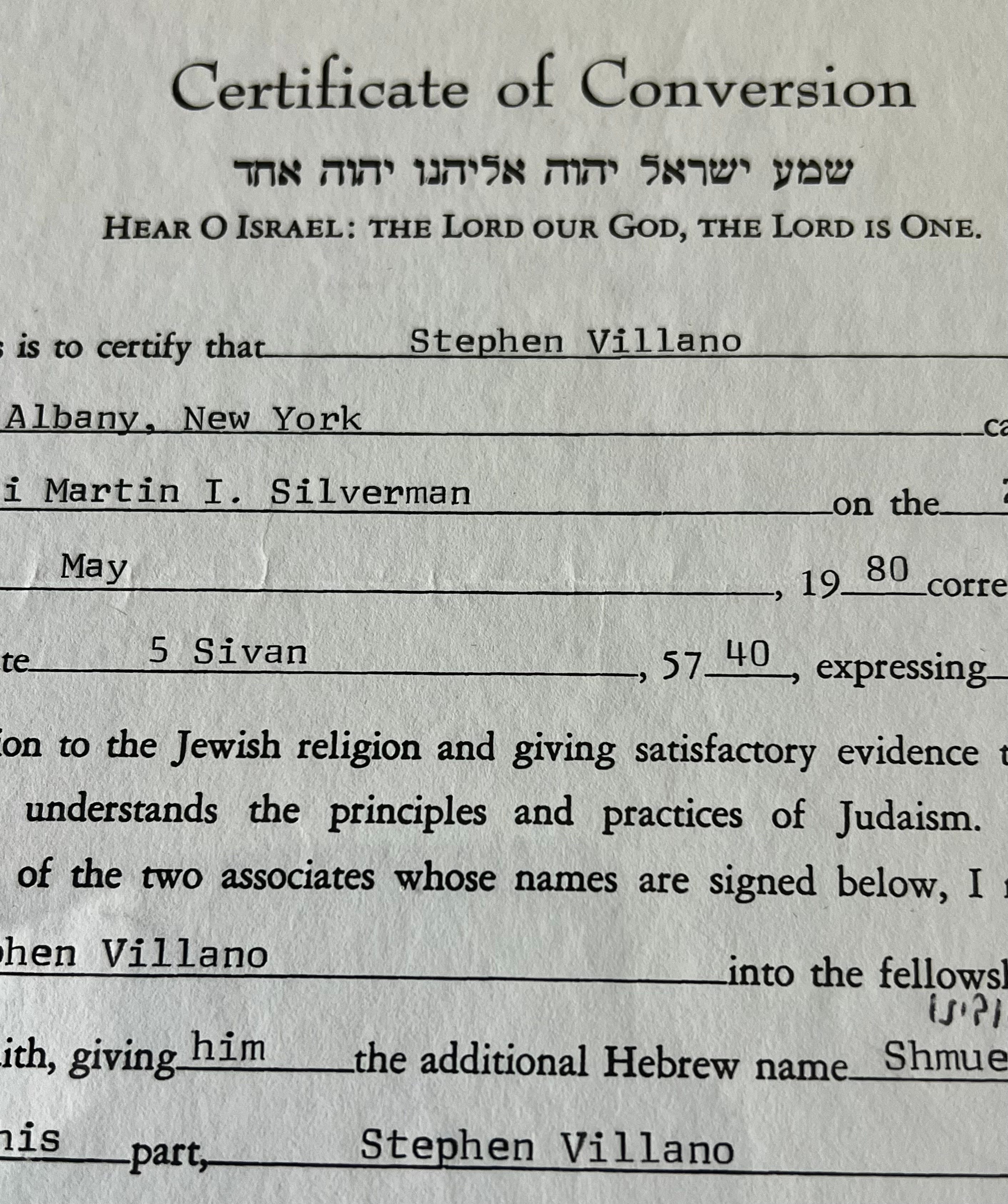
I converted to Judaism 46 years ago today, drawn to a set of beliefs not threatened, but strengthened, by rational questioning and debate; that found beauty in acts of faith and generosity, small and large; that understood, from centuries of experience, the insanity and inhumanity of exclusion and demonization; and was built on the bedrock of fundamental human decency, dignity, love and the preciousness of life.

Which is why, despite the current collapse of democracy in Israel and the careening of Israeli leadership into a fundamentalist, nationalist chasm not unlike those in history responsible for the slaughter of millions of Jews, I was shocked by the depth of hatred aimed at me for criticizing the Netanyahu government’s abandonment of the fundamental principles of Judaism and human rights.

Early last month, I wrote on an Instagram posting by Chris Cuomo of News Nation, that: 

“I am a Jew.  Netanyahu’s extreme Right Wing government is an attack on all of us.  A fundamental tenet of Judaism is advancing humanity; the present Israeli government is setting humanity back.  On Holocaust Memorial Day when we Jews say “Never Again,” we mean never against us again, nor against any other peopleincluding non-combatant Palestinians.  We are not attacking Israel; we are attacking inhumanity…”

While more than 250 readers/viewers agreed with my statement (including a reminder that the IDF’s own Code of Ethicsprohibits a disproportionate response to an attack) respondents from Israel and the United States alike (some of whom may have been Bots) piled on.  A sampling of some comments:

1.    “Whose side are you really on?”

2.    “You’re calling for the death of your own people.”

3.    “Thanks for showing us what the ‘Judenrat,” did.  Jew.”

4.    “Sad to see a fellow Jew who is product of Hamas propaganda.”

5.    “Here we go with the “as a Jew” comment.”

6.    “So, you’re one of those ‘Self-Hating Jews? You’re a fraud.”

7.    “Palestinians must be slaughtered. We are dealing with psychopaths.”

8.    “You’re not a Jew. Villano is anything but a Jewish name.  Putz.”

9.    “You probably love US garbage pails like Biden & Schumer.”

10. “Why don’t you just Convert—OUT of Judaism?”

The Judaism I converted to 46 years ago, was a far different Judaism than the false faith being practiced by some Extreme Right Wing and Ultra Nationalist Jews in Israel and the United States today.  It was the Judaism articulated by Israeli writer and activist Fania Oz Salzberger, daughter of the great Israeli writer Amos Oz, who writes that:

“God does not belong as a political entity telling us what to do; what to teach; where to invade.”

Menachem Begin was Israeli Prime Minister at the time I converted, and while he was more conservative than Israel’s Labour Party leaders of the previous 30 years whom I revered, he had just, 2 years earlier, been a signatory to the Camp David Accords, along with US President Jimmy Carter and Egyptian President Anwar Sadat—an historic peace agreement which earned all three leaders the Nobel Peace Prize.

There was a flicker of hope in the air, that a nearly 30-year constant state of War between Israel and Arab nations could be taking a pause, and could, perhaps, lead to a more permanent peace in the region.  Centuries old and seemingly irreconcilable differences over geography, demography, faith, ancestry and ancient rights of land ownership could be navigated if there was a willingness on each side to reach some livable accommodations with the other—and if the humanity of each side was respected.

If Menachem Begin, a leader of Israel’s armed revolutionary group for Independence the Irgun, who was labeled a “terrorist” by the British forces he fought for freedom, could shake hands with a sworn enemy of the State of Israel like Sadat, who led Egypt in the 1973 Yom Kippur War to retake the Sinai Peninsula which Israel had occupied since 1967—anything was possible.

There was great hope in the air for peace between Israel and some of its Arab neighbors, in the Spring, of 1980.  And, there was great hope in my life, that, after years of searching, I had found in Judaism, a set of ethical, humane, spiritual teachings and practices, in which I could believe, and rationally act upon.

I was a father of a five-year old son at the time when I chose Judaism as my new faith, the faith of his mother.  The hierarchy of my previous faith, Catholicism, had long since turned away from me by blindly supporting the American War in Vietnam, opposing equality for women, insisting that the promise of life was more important than life itself, discriminating against individuals because of their sexuality, and refusing to accept AIDS patients into their hospitals, and hearts, because of an outdated, and inhumane, concept of “sin.”

I spent years studying other faiths, and gravitated toward Judaism because of its grounding in reality, as well as spirituality; its’ fundamental commitment to repair the world (Tikkun Olam), and its’ insistence on refusing to wallow in darkness, and always, always work toward hope and the better side of human nature.

Converting to Judaism is not done on a whim; Jews have certain requirements for those they choose to let in.

After reading an article in the late 1970’s by the great Reform Jewish leader, Rabbi Alexander Schindler (the founder of ARZA, the American Reform Zionist Association) welcoming non-Jewish spouses in interfaith marriages to become Jews, I decided it was time to accept his invitation, and begin my journey toward Judaism. 

 It was a decision  which did not make my mother, a devout Catholic happy.  In fact, when I informed my mother I was converting to Judaism, she wrote me a letter in which she expressed how “heartbroken” she was; and that the announcement of “your becoming a Jew is not something I am proud of.” 

“I will never accept your decision to change your religion,” my mother wrote to me  six months before my Conversion to Judaism took place, on May 20, 1980.   In reality, it took years for her to become “comfortable” with my becoming a Jew.

We joined a large Reform Jewish Congregation in Albany, N.Y., and I came under the tutelage of a leading Reform Rabbi, Rabbi Martin Silverman, a disciple of Schindler’s, who guided me in my readings on Jewish history and Judaism.

Rabbi Silverman, whose wife, Phyllis, taught with mine in the Albany Public Schools, was already a remarkably courageous figure within the American Reform Jewish Community.  In the late 60’s and early 70’s before the Roe v.Wade  US Supreme Court decision which declared abortion to be a fundamental privacy and healthcare right of women, Rabbi Silverman had a secret compartment behind the sacred Torah Scrolls in the Chicago-area congregation he headed.   In it, he kept files of illegal abortions he’d helped women obtain, as well as a list of doctors willing to perform them.

Along with many other rabbis, ministers and priests across the nation, Silverman was a member of the Clergy Consultation Services, an underground network of fearless clergy, dedicated to protecting the life of the woman, first and foremost.  That was, after all, an essential teaching of Judaism—that the woman’s life was of paramount importance, and even if an abortion was necessary to protect the life of the woman, up to the moment of birth, abortion was a required medical procedure under Jewish Law, as well as in the Old Testament. 

Rabbi Silverman’s daughter, Amy Cohen, Executive Director of the Massachusetts Adoption Agency Adoptions with Love, and an advocate for women’s reproductive rights, told the Jewish Journal of Greater Boston: 

 “If someone was pregnant and couldn’t have or didn’t want the baby, he counseled women of all faiths and ethnic backgrounds about their predicament, explained what an abortion entailed, and then he’d refer them to where they could get a safe abortion.”

Cohen described her father as a “liberal, forward-thinking person, always involved in people’s rights.”

 After my guided, independent study with Rabbi Silverman, I was considered to be ready to participate in a “Conversion class” sponsored by the Capital District Board of Rabbis, with Rabbis of all denominations of Judiasm—Orthodox, Conservative, Reform—participating. 

Teaching the Conversion course, was the diminutive Susie Isser, no more than five feet tall–who was trained in the law and had escaped from Austria just before the Nazis made it impossible to leave.   An immigrant to the United States in the late 1930’s, Isser—a Jewish, female attorney– found the door to the American legal profession slammed shut to her, a similar story to the one recounted decades later by Ruth Bader Ginsburg.   

So, for 20 years, to help support her family, the brilliant Susie Isser scrubbed floors, and taught Hebrew Sunday School, one day per week.  Her son, Dr. Raymond Isser, went on to become Chair of the Judaic Studies Department at SUNY Albany, my undergraduate alma mater, where my wife and I met. 

Word of Susie Isser’s passion for teaching and her commitment to a humanitarian Judaism—and to the State of Israel—spread throughout New York State’s Capital District.  In her class, the Jewish spouse was required to take the six-month long conversion class along with the spouse converting to Judaism.  Among our fellow students, was an Iranian Jew, and his non-Jewish spouse—both of whom had just escaped from Iran before the Ayatollah and a cabal of fundamentalists had taken over that country.

In her lessons on Jewish history, Susie Isser cried when she spoke of growing up with a Tzedakah Box, found in Jewish homes throughout Europe, being filled with pennies each day, year after year, to support the development of a homeland for Jews—with the promise of no discrimination against any faith, and legal protections and respect for all human rights.  In fact, those human rights protections, became key elements of the UN Charter which created Israel in 1948.

That was the Judaism I converted to in 1980, and it’s mission to advance humanity and repair the world, while not perfect, was carried out in spirit and substance by a succession of Israeli governments, from Begin’s to Yitzak Shamir’s, to Shimon Peres’, to Yitzhak Rabin’s. 

 That Judaism was violently attacked with the assassination of Yitzhak Rabin in 1995, by an Ultra Right Wing Nationalist disciple of convicted Jewish terrorist Meir Kahane, who was himself killed by an assassin’s bullet.

That Judaism began its slow slide toward assisted suicide, with the election of Benjamin Netanyahu, for the first time in 1996, and his repeated pandering to and enabling of the poisonous growth of Ultra Nationalist & Extremist groups throughout Israel by placing them in key Israeli government positions of extraordinary power—including power over religious matters, such as questions of “Who Is A Jew?”

Many of Kahane’s ultra nationalist adherents are now, nearly 30 years later, in key Israeli government positions, including Bezalel Smotrich, the Israeli Finance Minister with oversight responsibility for the West Bank, arrested on terrorist charges in 2005 by Israel’s Shin Bet for plotting to block Israeli withdrawal from Gaza; and, Itamar Ben-Gvir, Israel’s National Security Minister, convicted multiple times for supporting terrorist organizations, and according to The New York Times investigation on Israeli extremists, published on Sunday, May 19, 2024, threatening  the life of  Yitzhak Rabin “ in front of TV cameras in 1995,” two weeks before Rabin was murdered. 

Rabin was murdered at a Peace rally, where he was speaking on behalf of the Oslo Accords—the US brokered peace agreement in 1993 between Israel and the Palestinian Liberation Organization—which advanced the long held US foreign policy objective of a two-state Israeli/Palestinian peace settlement.

My Judaism, like Rabin’s, is one that believes in diversity, equality, inclusion, humanity and love, and a sacred obligation to repair the world.  My Zionism, like David Ben Gurion’s, Theodore Herzl’s, Amos Oz’, Susie Isser’s, and Yitzak Rabin’s is a Humanist Zionism, in which a State of Jews could only be a liberal democracy, NOT an exclusionary Nationalist Zionism. 

As Fania Oz Salberger has so eloquently said:

“Ben Gurion, the child of Socialist Zionists and of old Labour, and Theodore Herzl, a liberal, BOTH believed that Arabs AND Jews had to be part of Civil Society.”

That was the fundamental premise upon which Israel was founded; that was the basis of the international agreement which created the State of Israel 78 years ago; and that was the pluralistic, humane, loving, generous and intellectually honest faith to which I converted 46 years ago this week.

Being Part of The Wheel.

“Dying’s part of the wheel, right next to being born. You can’t pick out the pieces you like and leave the rest. Being part of the whole thing, that’s the blessing.”–Angus Tuck, Tuck Everlasting.

Steve Villano

May 17, 2026

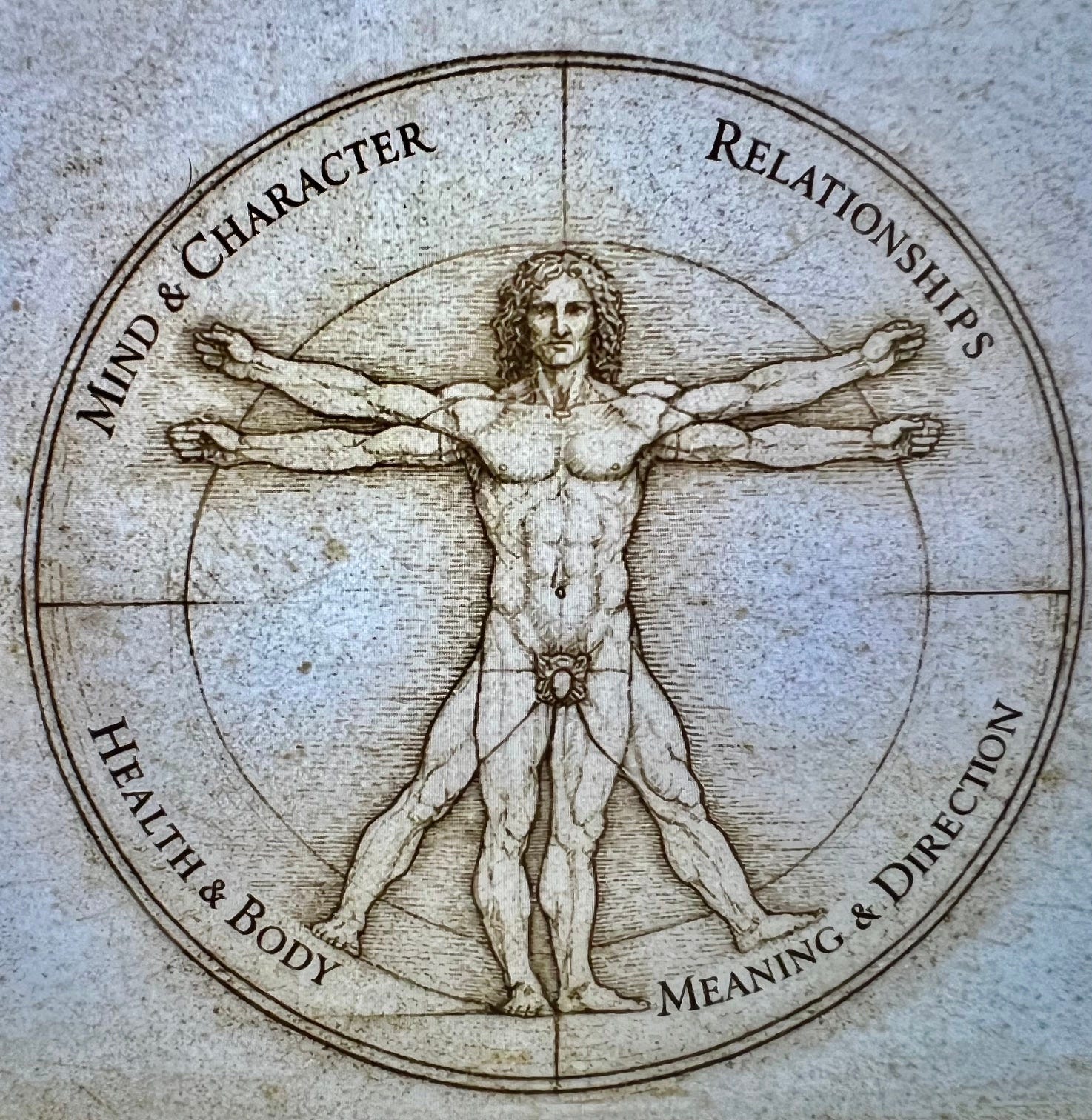
(The Vitruvian Wheel of Life; based upon Leonardo da Vinci’s Vitruvian Man, dated to c. 1490, and inspired by the Roman architect, Vitruvius.)

.

It’s not even August yet, but I feel like we’ve been enduring the dog days for a very long time.

The bright promise of it not being 2025 faded early this year, with the news of the death of one of our closest friends from college, whose daily decline from dementia dragged on over seven years. Like a slow-growing cancer, the disease diminished her physical abilities—except for still going on her long, beloved walks; it robbed her brilliant mind and sharp wit from engaging in intellectual or cultural talks; and, soon, it would take away her capacity to talk at all, or even feed herself. Risa was the human we most enjoyed laughing through life with, from when we were 19 years old. Gone now; no longer ours.

To witness the gradual hollowing out of this friend so full of life and love, and easy laughter, whose mental quickness I first enjoyed in Professor Warren Roberts Advanced World History Class at SUNY Albany nearly 60 years ago, was to experience our own demi-death, in small cuts, each time we exchanged Zoom calls with her and her wonderful partner.

Toward the end, I could still make her laugh by loudly repeating the booming message which emerged from this petite five foot friend, when she needed to command the attention of students acting rowdy on her watch as a dorm Resident Assistant.

“Get Off the Quad,” she’d bellow, causing obnoxious, college boys a full-foot taller than her to quiet down and clear out. They didn’t mess with Risa.

“Get Off the Quad,” I’d shout to her, toward the end of all of our conversations, bringing a twinkle to her sometimes blank eyes, and eliciting laughter which carried us back to our college days for a split second. There was that spark of momentary connection once again, compounding the cruelty of watching her disappear into someplace none of us knew, nor could find her.

I understood the constant pain Mae & Angus Tuck felt in Natalie Babbitt’s eternal masterpiece, Tuck Everlasting, (Farrar Strauss, New York, 1975), who, blessed/cursed with unending life, outlive all the people they loved, including their contemporaries:

“We Tucks are stuck; so we can’t move on. We ain’t part of the wheel anymore. Left behind everything around us…Dying’s part of the wheel, right next to being born. You can’t pick out the pieces you like and leave the rest. Being part of the whole thing, that’s the blessing.”

Like the Tucks, I did not feel blessed to be part of the “changeless sweep of change,” especially when it recently swept away a sweet and good and decent man, our friend, Ed, who graced our lives for decades, casually crushing him over time by stealing his life, breath by breath, and pushing him off the wheel, before he wanted to go.

Now Ed, was dead, my calming model for how well a man could act under all circumstances, steady and kind at all times. His passing pulled the rug out from under me, careening me out balance, and making me useless to comfort his grieving partner, who was to us, like another sister. Ed’s death, and his characteristic acceptance of its’ arrival, knocked out my breath, and left me gasping for the clean, quiet air, that was, in the end, denied to this good friend.

Like Job, I lamented to God, whether she existed and was paying attention, why all the wrong people, the good people, were dying, while the evil were left behind to destroy the world, not repair it. My argument with any “higher power” who would listen went like this:

“When needed most, God, why aren’t you near?

All the wrong people are dying.

If there’s a God, she must be hiding—

Averting her eyes & ears to wailing and crying.

Taking Risa & Ed, Pretti & Good,

And Caroline Kennedy’s daughter.

Withholding food, medicine & water,

From babies within our own borders,

And Lebanese & Gazan children, tagged for slaughter.

Are you there, God?

Those innocents are NOT your target;

Unless you are gathering the best around you,

Creating Hell’s Tenth Circle of evil here, on earth,

Governed by ghouls, pedophiles and thieves,

Teaching the rest of us who want to believe,

That justice only comes to those of us who grieve

The good already gone from us.”

The actor Martin Short, now 76 years old—who has endured the Job-like tragedies of the death of a brother when he was 12; of his mother from cancer, when he was 17; of his father from a stroke three years later,; of his wife, Nancy, dying from ovarian cancer 15 years ago; and his daughter Katherine, dying from suicide, just this February—told the New York Times last week (“Martin Short and the Secret to Finding Joy While Surviving Tragedy”, May 15, 2026, by Jason Zindman); https://www.nytimes.com/2026/05/15/movies/martin-short-marty-life-is-short.html?unlocked_article_code=1.jFA.pGsD.HIMhk6S-VF29&smid=url-share), that he believed “grieving gives you muscles to survive.”

In Short’s Job-like consideration of the role of a “higher power” in the death of loved ones, he quotes the legendary Director Mike Nichols: “I see no reason why you just can’t keep the conversation going.”

To those of us, like Martin Short, who’ve made it past 75 with our physical and mental abilities pretty much in tact—a rare gift, as noted by Dr. Zeke Emanuel in his controversial piece published in the Atlantic Monthly, October, 2014 Issue, entitled “Why I Hope to Die at 75,” in which he does not argue for a Kevorkian-like conclusion to our lives—Emanuel discusses the unrealistic arrogance of “American immortality,” in our obsessive belief that each of us is an exception to the norm, and like fame, will somehow “live forever:”

“American immortals operate on the assumption that they will be precisely such outliers. But the fact is that by 75, creativity, originality, and productivity are pretty much gone for the vast, vast majority of us. Einstein famously said, “A person who has not made his great contribution to science before the age of 30 will never do so.” He was extreme in his assessment. And wrong…There are some, but not huge, variations among disciplines. Currently, the average age at which Nobel Prize–winning physicists make their discovery—not get the prize—is 48.

Embracing our own mortality, instead of trying ot erase it, is Emanuel argues, essential to getting the most out of however much more time we have left, and simultaneously, recognizing our obligation to our children and grandchildren to redirecting scarce resources for improving life’s quality—not only for us, but for them, now and forever, Amen. Such courageous, selfless decisions are at the very heart of accepting that we are part of a “wheel,” as my father tried to tell me on his death bed by pointing at my watch, and mouthing the words, “time to go.” The wheel works because we are all part of it.

Emanuel goes on to explain how we are not like the Tucks, who have sipped from the waters of immortality, nor should we aspire to be:

“And I am not advocating 75 as the official statistic of a complete, good life in order to save resources, ration health care, or address public-policy issues arising from the increases in life expectancy. What I am trying to do is delineate my views for a good life and make my friends and others think about how they want to live as they grow older. I want them to think of an alternative to succumbing to that slow constriction of activities and aspirations imperceptibly imposed by aging. Are we to embrace the “American immortal” or my “75 and no more” view? (https://www.theatlantic.com/magazine/archive/2014/10/why-i-hope-to-die-at-75/379329/?gift=CMu1iNc-Sy6nzR8uCo5sAk7f3NMnGDlhxRnBJCPm7M0&utm_source=copy-link&utm_medium=social&utm_campaign=share).

At 77, I know that each day is a gift, especially as I near the 33rd Anniversary of my father’s death at 78. Mortality, mine and that of people I love, is ever present, in every waking moment. Bearing witness to too much desperation, suffering, disease and the deaths of children, friends and siblings; cradling my parents in my arms as they took their last gasp of life; and collapsing in shock when a bright, young 40-year old colleague was ravaged by an inhuman infection ripping him from his babies, is, I am aware, the high price of still being alive, after they have left us.

Like Natalie Babbitt’s Tucks, it is the passage of time that worries me most. For those of us neither “cursed,” nor “blessed,” with immortality, as Mae Tuck tells 10-year old Winnie Foster, who discovered their secret, we can no longer pretend we won’t die, when people who comprise important parts of our lives do, and take parts of our existence with them. The question for those of us surviving and trying to make sense out of why we are still here, is what do we do with what time we’ve got left? How do we give our lives more meaning? How do we live out our days well? How do repair a world that has been ripped apart? Love more? Or, as Martin Short, suggests, how do we, “head for the light?”

Noah Kahan, the extraordinarily talented singer/songwriter, who has struggled with mental health challenges for all of his nearly 30 years, and founded “The Busyhead Project” (named after his first Album to raise money for local mental health care groups), has just released his newest Album, at the same time Netflix is airing a revealing documentary about him entitled, “Noah Kahan: Out of Body.”

The album, The Great Divide (Mercury Records, 2026), opens with a beautiful, haunting song entitled “End of August,” where the sound of contemplative piano keys pull you immediately into Kahan’s musical explanation of belonging and loss, seamlessly coupling one with the other, of death with life:

Ending of August,

The bugs are just starting to die;

All the neighbors are votin’ for someone

Who wins every time;

I thought getting older

Meant knowin’ it’s too late to try…

Kahan’s chorus celebrates how two things, life & death, attachment & loss, are true at the same time, underscoring the wisdom of Angus Tuck about “everything being part of the wheel,” and the need to “make a difference in the world:”

Oh everything you see out here will die—

Oh, it’s a matter of time

‘Til its fields of ice and reflected lights,

‘Til it’s our time, ‘til it’s our time, ‘til it’s our time;

And it’s ours now,

Cause it’s ours now.

###

The Wristband Wars: For the Rich, $93,000 Watches, Glitzy Galas; For the Rest of Us: Blood Tubes to Sell Our Plasma, $60 Per Pop.

What’s obscene is not just the $93,000 watches, & the MET Gala’s’ $100,000 tickets, but that 215,000 working people per day are forced to sell their blood plasma to afford food, rent & health care

Steve Villano

May 08, 2026

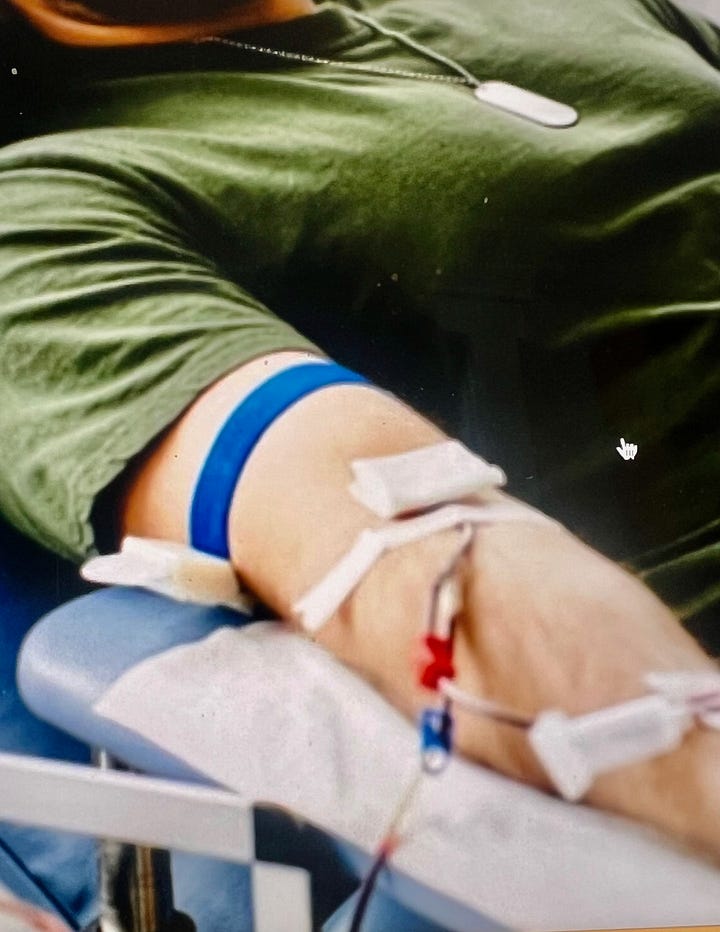
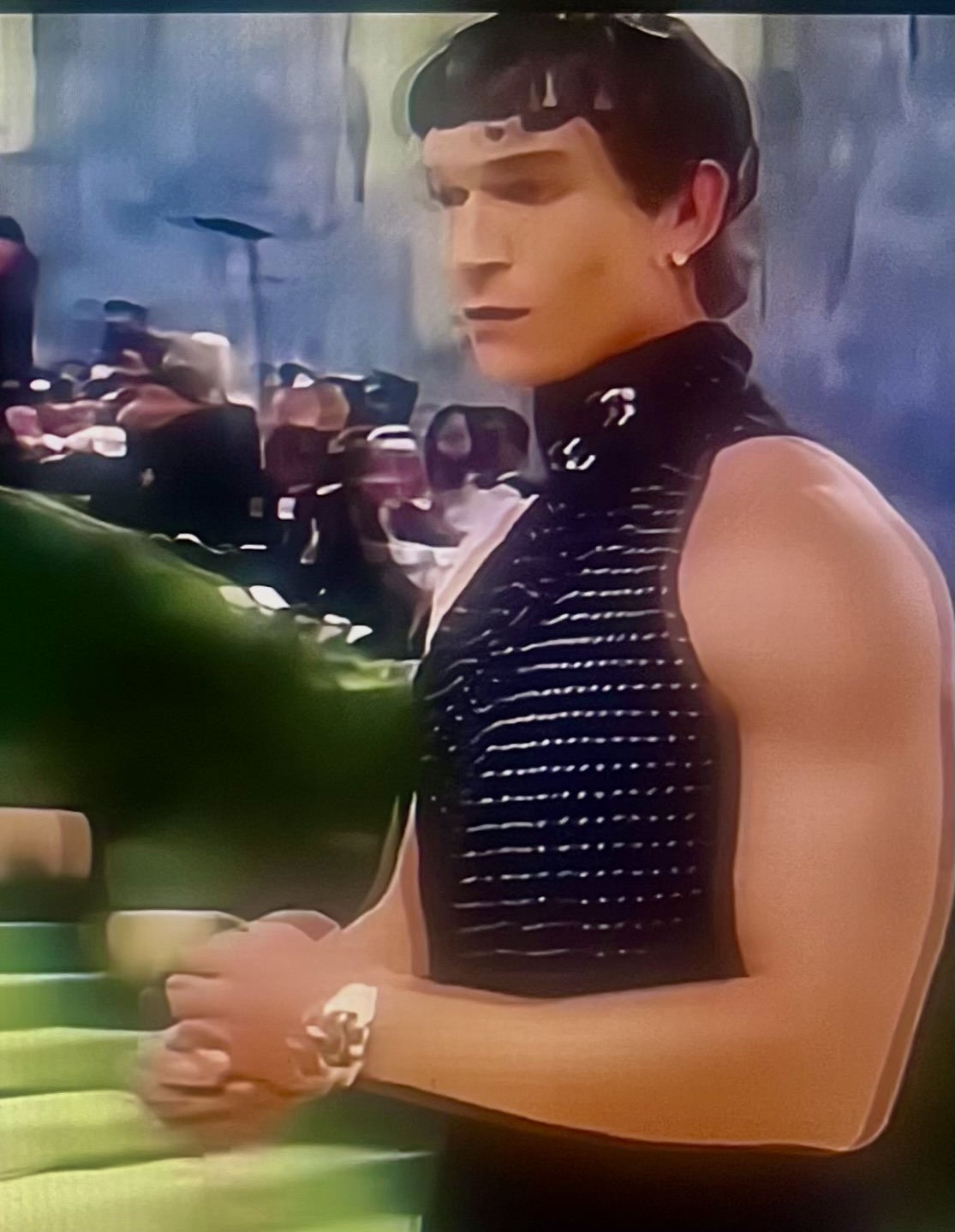
(An average American (l.)—one of 215,000 per day—sells his blood plasma for $60 to $80 per litre at one of 1,200 Plasma Extraction Centers in the US, while the 26-year old actor Connor Storrie arrives at the $100,000 per ticket MET Fashion Gala wearing a $93,000 Omega gold watch on his wrist, instead of a Y-tube for separating blood from plasma. There are more Plasma Extraction Centers in the United States than there are Costco Stores, according to NBC News.)

One month and one-day before the utterly over-the-top, garish Metropolitan Museum of Art’s 2026 Fashion Gala for the fabulously rich, famous and momentarily famous, a life-and-death story bled out of the New York Times Sunday Business Section—dwarfed by a full-color graphic that dominated 3/4’s of the page dealing with “Teens and Chatbots.”

The story (April 5, 2026) by Kurtis Lee and Robert Gebeloff was headlined: “The Middle Class Is Selling Blood Plasma to Get By.”

In the daily orgy of news about Trump’s billion-dollar-a-day War against Iran; exploding oil prices that now cost a family at least $100 per week just to fill up one car; Jeff Bezos’ $10 million sponsorship of the MET Gala and $50 million Venice wedding to Lauren Sanchez, $120 million NYC townhouse, AND his $500 million yacht; and the Trump family’s plundering of the Presidency for their own pig-like, personal profit, no one paid much attention to the “blood-selling” story.

Two months earlier, NBC News’ Shannon Pettypiece did an eye-opening version of the “Blood Money” story , but few others paid attention, since most corporate network producers preferred puffing up their tiny nightly newscasts with a ‘feel good’ story about “America Strong.” Social media sites didn’t as much as sneeze at the story in the lead-up to the MET Gala, because lingering too long on tough-to-take stuff loses them clicks and cash.

In the Hunger Games-like dystopian world in which we dwell, where a completely corrupt government and a rich, removed, powerful ruling class controls the narrative and the wealth, no one of consequence wants the well-heeled citizens of “The Capitol,” to be made uncomfortable by whats actually happening to nobodies in the “poorer Districts” of the country. Better to fawn over how cute it was that singer Sam Smith’s boyfriend, designer Christian Cowan, held up the fabric train of the 52 pound ensemble he designed for Smith, than to worry about strangers starving to death.

Since the real-life interviews in Pettypiece’s NBC’s piece back in February of people selling their blood plasma for money to survive, hardly any other news organizations wanted to be bothered by the millions of Americans shamefully slipping quietly into so-called “Plasma Extraction Centers” in suburbs, cities and rural communities across the country several times per week. According to NBC, there are now over 1,200 “Plasma Extraction Centers” across the United States, more outlets than Costco, driving the multi-billion dollar industry American blood industry, which provides 70% of the world’s blood plasma., raking in billions of dollars in profits.

Of course, It’s far easier, loads more fun, and laughably more lucrative for all—including the flush-with-money blood plasma conglomerates—to amuse ourselves to death, by focusing on the “Hunger Games” model of a multi-million dollar celebrity costume party known as the MET Fashion Gala to which no working stiffs—and certainly no blood sellers— were invited.

Lost on the effusively empty-headed entertainment reporters gagging on every gaffe at the Gala, was the double irony that “The Devil Wears Prada 2” premiered at exactly the same time as the MET Gala, with Stanley Tucci reprising his role as high-fashion’s facilitator, and reminding us of his portrayal of Cesar Flickerman in the Hunger Games, where his bizarre character, demeanor and appearance ridiculed everything about the entire culture. Tucci’s dual roles served as a perfect validation at the precise time for the vacuity of all involved.

The price of admission to the MET’s Hunger Games Gala was fame, fortune or being carefully chosen (by the fashion elite) for a precious $100,000 ticket to attend the pretty predators’ ball in a city where 1 in 4 people live in poverty and the median household income is $79,000.

New York City’s extraordinary Mayor Zoran Mamdani recognized as much by skipping the grotesque gala of the greedy, and honoring NYC’s Garment workers, where the average annual salary for a seamstress is $41,271, or $793 per week. The Democratic Socialist Mayor wisely chose to stay in the Districts.

For those starved for sensory stimulation, why worry about 215,000 normal people a day, many of them your neighbors, selling their blood plasma to survive, when you can be whisked away from the gritty realities of the world on the long, flowing trains of the sparkling million dollar garments draped over the toned and tony, dripping down the MET’s storied staircase; or, when you be distracted and dazzled by the $93,125 Omega Constellation Watch in “moonstone gold” flashed by the Fashion Industry’s latest “It-boy”, Connor Storrie, one of the instantaneous stars of the wildly successful “Heated Rivalry” Netflix series. After all, wouldn’t you rather look at the smoothly muscled arm and perfectly pierced ears of a young Robert Mapplethorpe, than the scarred, unsightly arm of a middle-aged man’s pierced with with tubes designed to suck valuable plasma from the rest of his blood?

Why be such a downer when all everyone wants to talk about was which celebrity was wearing whose clothes? Who really cares if you had to sell your own blood plasma—twice per week, at $60, $70, or $80 per pop, to afford day-care for your child? Isn’t watching this Oligarchs’ orgy more fun? After all, like the Hunger Game’s competition for survival, it’s only entertainment— can’t you forget your troubles for a few hours?

Well, actually, no. Not when you have to sit still for a few hours every week in a “Plasma Extraction Center,” in suburban Houston, or downtown NYC, or rural Idaho, with a Y-tube hooked up to your arm, feeling the blood plasma being pumped out of you with the same mechanical, methodical way cows teats are milked.

The Times reporters Lee & Gebeloff described a typical day at two Webster, Texas “Plasma Extraction Centers” just down the road from the Johnson Space Center:

On recent mornings, people waited in lines outside both locations. Many described themselves as middle class, and said that even a few years ago they would not have imagined exchanging their plasma for cash There was a 30-something tech worker trying to save for a house, a sixth-grade special education teacher looking to cover rising health care costs; a night shift nurse struggling to pay for child care fees.

Most of the blood “sellers” were visiting the stark “Plasma Extraction Centers” twice per week—the maximum allowed under FDA regulations—earning an average of $70 per visit, or $140 per week, and in many cases, nearly $600 per month. Alternatively, they could do what’s done by the citizens of most other countries in the world—donate their blood for free to their fellow citizens, and family members. The World Health Organization discourages the practice of individuals selling their blood plasma, since long term health effects on the human body are not known.

Kathleen McLaughlin, an award winning journalist who specializes in reporting on economic inequality, wrote in her 2023 book, Blood Money: The Story of Life, Death and Profit Inside America’s Blood Industry (Simon & Schuster, NY) about how many of these so-called “plasma extraction centers,” first targeted communities of laid-off auto workers in the Rust Belt, and poorer communities along the US/ Mexico border. Now those extraction centers—which literally suck the plasma out of people for pay— are ubiquitous in suburban shopping malls in virtually every community in middle-class America.

Outside one such community near Phoenix, Arizona, a women laid-off from her job in finance making $87,000 per year and now making $16.11 per hour, told NBC’s Shannon Pettypiece a few months ago:

““I’m angry that I’m working this much, that I’m educated, that I’m articulate, that I have marketable skills, and that I’m reduced to selling my plasma,” said Jill Chamberlain. “I was ashamed at first, but now I’m angry. This is not how things are supposed to be.”

Peter Jaworski, a Georgetown University Professor who studies the ethics and economics of America’s plasma business told NBC, that: “As America’s economic divide widens, with the top 1% of households owning more than 30% of the country’s wealth, the payments people receive for selling plasma are playing a quiet role in keeping households above water financially.”

One of the most striking stories of blood literally being squeezed out of Americans gasping to breathe and stay afloat, was told to NBC’s Pettypiece by Michelle Egan from suburban Minneapolis, selling her plasma to pay her young son’s $700 per month pre-school tuition:

“It’s a nice preschool. Sometimes I do think, ‘I bet there are no other parents here that are donating plasma to pay for this preschool,’” said Eagan, who has made around $400 a month from her plasma since September.

NBC went on to report that:

The money has become a necessity for Eagan’s family after she left her job making $75,000 a year as a paralegal for UnitedHealth Group to care for her son full time. Even living in a relatively affordable part of Minneapolis, her husband’s $90,000 salary as a business manager hasn’t been enough for the family of three to get by, and their credit card balances have been steadily rising.

Eagan told NBC that she sells her plasma to BioLife— a part of the large Japanese drugmaker Takeda. Pettypiece went on to report that many plasma centers are run by a handful of biopharmaceutical companies that turn the fluid into medicine.

BioLife, like others, uses incentives to keep Michelle Egan coming back:

“For instance,” the NBC story goes on, “her first payment of the week is $45, but if she goes back a second time that week, she gets $65. In November, the company ran a “Sweater Weather” promotion where clients who sold their plasma eight times that month would get entered into a raffle to win $1,000. In December, BioLife offered reward points for people who donated seven times in a month or for three consecutive months that they could redeem for gift cards” Astonishing.

“It’s like a drug dealer,” Eagan added. “Once they have you in there, they have to keep you coming back.’

The Plasma Protein Therapeutics Association notes that it can take plasma from more than 100 people to support one patient each year. In a major American industry—the Blood Plasma Industry—which exported more than $6.2 billion of Plasma last year— the need for an endless supply of plasma sellers— driven to desperation by an increasingly crushing economic system—who must earn money to support their own families—even if those already-low Plasma harvesting fees are reduced as some of the blood-sucking companies have already talked about doing. Increased financial pressure on plasma sellers, and the industry’s ghoulish push to maximize its’ profits, are the two most powerful forces propelling this twisted, purely American, capitalist phenomenom.

Jill Chamberlain, scrambling to pay her bills for herself and her 18-year old son, has neither the time, nor the inclination to watch the obscene Hunger Games-like MET Gala, which mocks the daily struggles of working families, and glorifies gaude, greed, celebrity and vast differences of wealth in this country:

“We always heard the middle class was disappearing,” she said. “But really, really quickly, the rich are getting richer and the rest of us are sinking.”

Ten years ago, singer/songwriter Paul Simon wrote prophetically that “Wristbands” (Stranger to Stranger, 2016, Concord Records) were symbols of the increasing stratification of our society and the growing chasm between the very rich, and the rest of us who weren’t:

“Wristband, my man,

You’ve got to have a wristband;

If you don’t have a wristband, my man,

You don’t get through the door.”

I’m not sure even such a profound poet and visionary as Simon ever imagined a glittering gold $93,000 watch as the wristband of admission to a comfortable life, and a Y-shaped Plasma/blood sorting tube, as a Yellow tattoo, signifying omission from it.