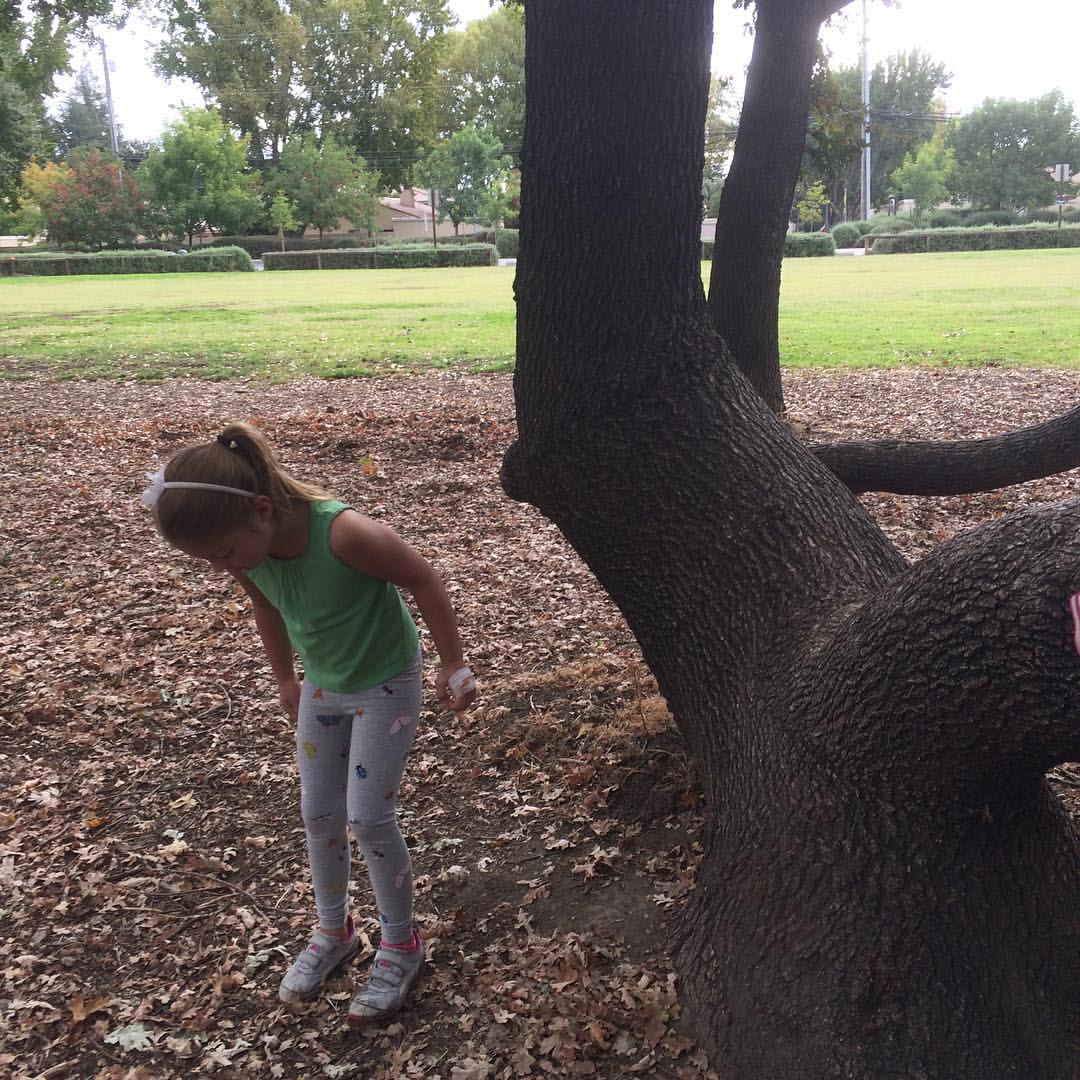
Somehow, the tree knew.
The tree knew she loved her.
Unconditional…
So, she gave the girl
A place to play, climb all day.
Acorns, shade; a rainbow of leaves.
The girl just loves her.
The tree looks after the girl.



Somehow, the tree knew.
The tree knew she loved her.
Unconditional…
So, she gave the girl
A place to play, climb all day.
Acorns, shade; a rainbow of leaves.
The girl just loves her.
The tree looks after the girl.

I slipped yesterday.
In a conversation with my granddaughters’ maternal grandmother about birthdays, I slipped.
“I can never forget your birthday,” I said to this wonderful woman, “since it’s the same day JFK was killed.”
Uh-oh. Before I could even wish the words back into my mouth, my 6-year old granddaughter absorbed them.
“Who’s JFK?,” she asked her mother, a Stanford-educated college professor & archeologist, sitting next to her on the couch. “Why was he killed?”
Calmly, my daughter-in-law explained who, and what, to this extraordinarily perceptive little girl. “He was killed by a bad man,” she said.
“But, why?” the 6-year old pressed.
“Because sometimes, bad people just do bad things,” her sensitive Mom said.
My granddaughter sighed: “I just wish there were no bad guys.”
“Me, too,” I said to this special 6-year old, wishing life could only be as beautiful as she sees it, all the time and forever.
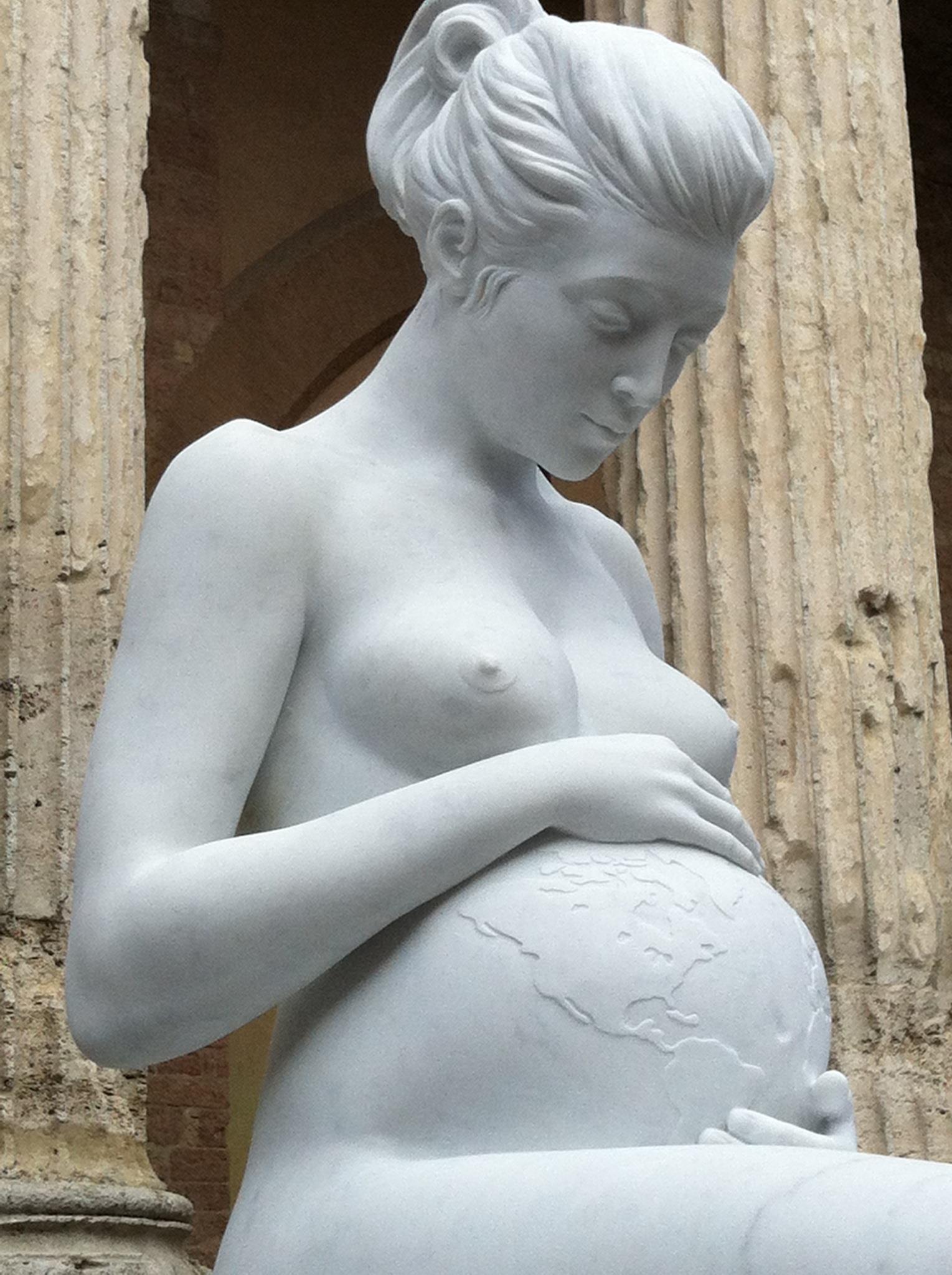
Two different views on Moses: Pope Francis’ beautiful reference to a loving, law-giving Moses in his speech before Congress on September 24, 2015, sent me to the archives of the internet, to look up Bibi Netanyahu’s reference to Moses before a joint session of Congress, on March 3, 2015.
As a Jew, I am embarrassed by Bibi’s shallow fear-mongering, and superficial interpretation of what Moses means to mankind.
First, Bibi: “Overlooking all of us in this Chamber is the image of Moses. Moses led our people from slavery to the gates of the promised land. And before the people of Israel entered the land of Israel, Moses gave us a message that has steeled our resolve for thousands of years. I leave you with his message today: ‘Be strong and resolute, neither fear nor dread them.” (This came at the end of BiBi’s speech to Congress dripping with fear, hatred, and distrust of “the enemy,” in this case, Iran, and the Nuclear Arms Agreement with Iran.)
Then, Pope Francis: “Yours is a work which makes me reflect in two ways on the figure of Moses. On the one hand, the patriarch and lawgiver of the people of Israel symbolizes the need of people to keep alive their sense of unity by means of just legislation. On the other, the figure of Moses leads us directly to God and thus to the transcendent dignity of the human being. Moses provides us with a good synthesis of your work; you are asked to protect, by means of law, the image and likeness fashioned by God on every human face.”
(This came at the beginning of the Pope’s appeal to Congress to work toward the “common good,” and for the dignity of all people.)
Two views of Moses; 6 months apart, yet centuries apart; fear and belligerence vs. hope, love and the rule of law for human dignity; bellicosity and flippant phrases vs. eloquence and the language of the heart.
We Jews need a better spokesperson for the meaning of a just, loving Judaism.
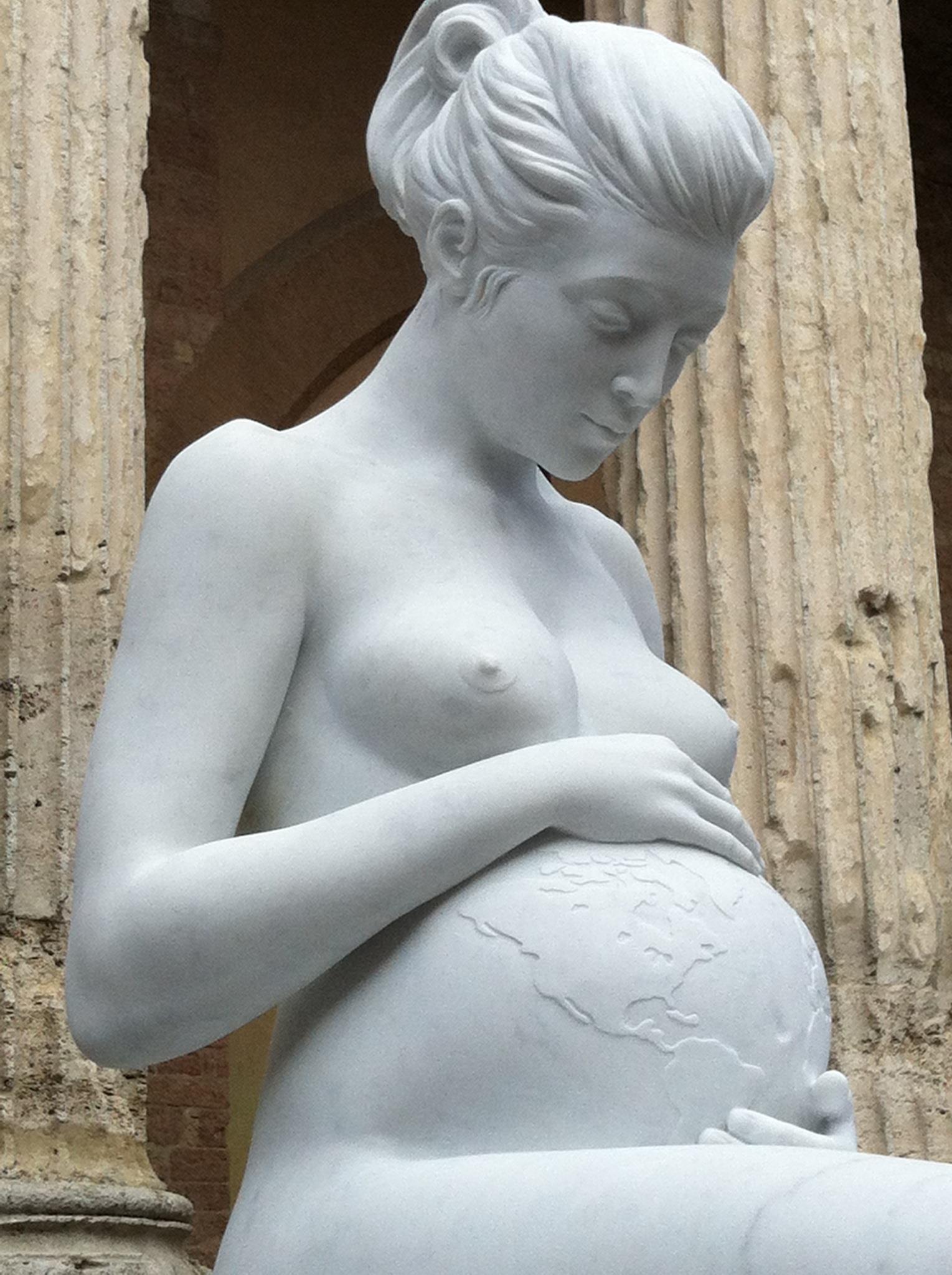 (photo by Steve Villano, Assisi, Italy, September, 2012).
Refugees from Fire,
Refugees from War. Humans:
United by more…
Now that the decades long dream of building a new LaGuardia Airport, took a giant step closer to reality this week, with Governor Andrew M. Cuomo declaring the $4 billion project as “happening,” something else has to happen.
The new LaGuardia Airport, when completed in 2021, should be named after Mario M. Cuomo, the public official who paid more attention to the airport and its impact on the New York Metropolitan region than any other elected official since, well, Fiorello LaGuardia.
LaGuardia Airport’s past is as storied as it’s dependably dismal performance for 27 million passengers (in its last full year, 2014) has been pilloried. Built on the site of Queens County’s old Gala Amusement Park in 1929, the airfield was first opened for private use only and named after aviation pioneer Glenn H. Curtiss. A few years later, it was renamed the North Beach Airport.
In 1937, New York City took control of the airport—located only 8 miles from Manhattan– expanding it by filling in several hundred acres of waterfront. Two years later, when it opened to commercial air traffic for the first time, it was renamed the New York Municipal Airport/LaGuardia Field, in honor of the incumbent Mayor, who would have personally landed every plane, if he didn’t have the nation’s largest City to run. LaGuardia’s fascination with flying was legendary. During World War I, the “Little Flower” was commissioned into the U.S. Air Service, just a few months after being elected to Congress, and commanded a unit of American bombers.
A decade after New York City took ownership of the airport, the City entered into a lease-agreement to run it with the Port Authority of New York/New Jersey, and has just extended their joint operating agreement through 2050.
But, it was Mario M. Cuomo as New York State’s Governor from 1983-1994, who brought the same kind of public-spirited passion to improving and “Rebuilding” New York’s infrastructure, that LaGuardia did. Cuomo recognized, decades before most elected officials were paying attention to the issue, that the nation’s infrastructure was crumbling, no where more noticeably—and with more profound consequences—than in 300 year-old New York City. He championed “Rebuild NY” bond issues, and understood clearly the connection between public works, public/private partnerships, economic development & job creation.
For his entire 12 years as Governor, Mario Cuomo championed a “New, New York,” tailoring specific economic development programs and ready-to-go infrastructure “Rebuilding” projects to every region of the State. A frequent critic of the Administrations of Ronald Reagan and George H.W. Bush, Cuomo eloquently argued that they would spend “billions on bailing out banks and the rich, but not one cent for rebuilding roads and bridges.” His “progressive pragmatism” was, in fact, a continuation of the structural rebuilding of America, started under FDR, and advanced by Mayor LaGuardia.
“Nobody notices when you fix the underside of a bridge that’s crumbling,” Cuomo would say to me, as we traveled to numerous “Rebuild New York” events on Long Island. “But it’s the kind of work that we are paid to do.”
Mario Cuomo’s links to LaGuardia Airport were substantial, and went beyond his envisioning transportation links between LaGuardia and JFK airports to Manhattan—at a time when most politicians and pundits belittled the “Train to the Plane” idea as a pipe dream. In his first term, Delta Airlines opened Terminal D, at the East End of the Airport. During Cuomo’s third term, Delta Airlines expanded their shuttle service to Boston, DC, and Chicago out of the now-historic Marine Air Terminal.
I was with Cuomo in 1992, when he cut the ribbon on U.S. Air’s brand, spanking new Terminal C, opening 21 new gates and bringing more shuttle service to the bustling Northeast corridor. Cuomo looked approvingly at the gleaming new facility, and what he saw were more jobs for working people. He knew intuitively that the airport was an engine of economic opportunity, creating 10,000 jobs at LaGuardia itself, generating 10 times as many local jobs and pumping some $14 billion into the regional economy.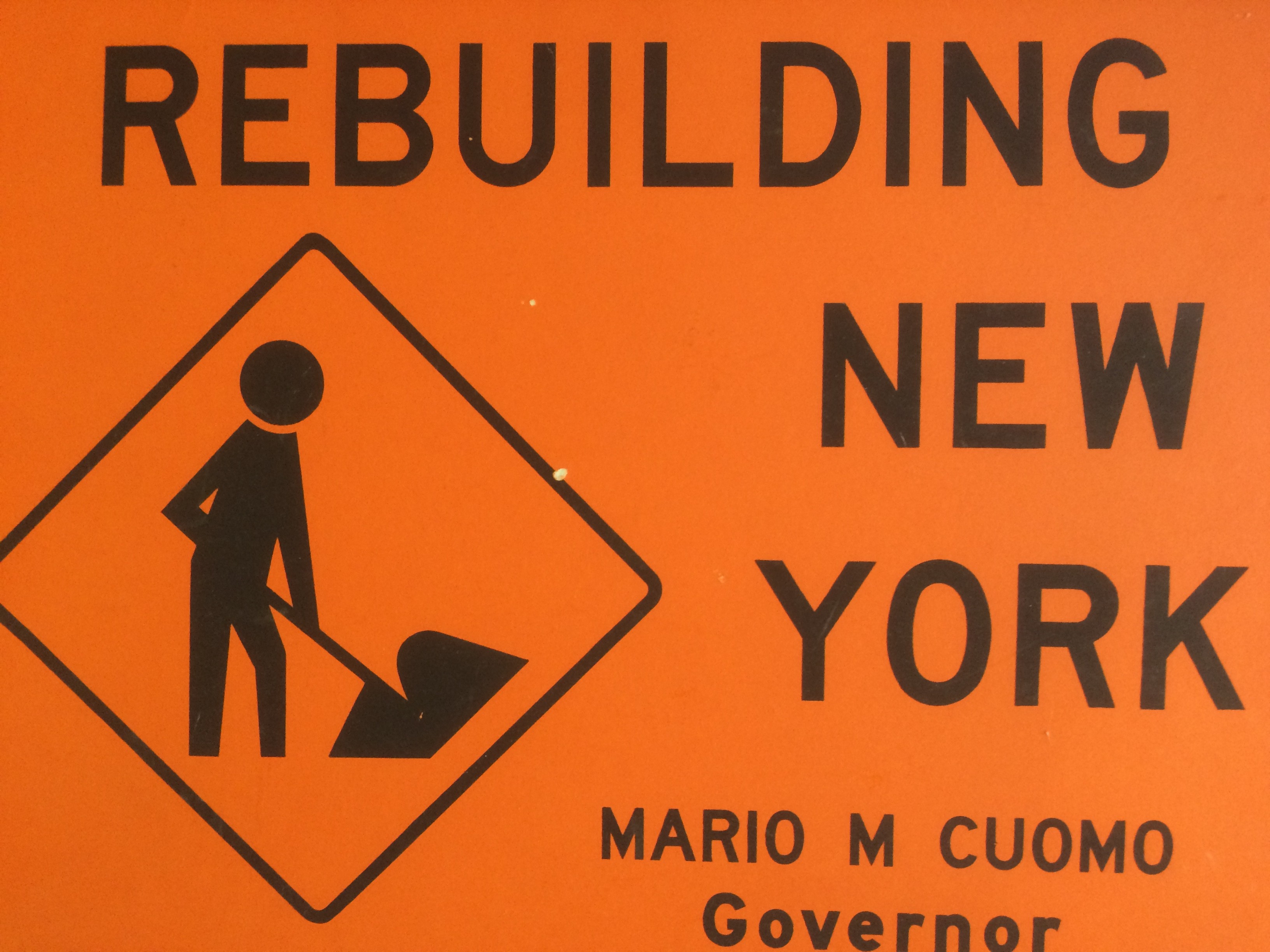
Naming the “New” LaGuardia Airport after Mario M. Cuomo would be a fitting tribute to a working-class public servant from Queens, who viscerally understood the value to each one of us of building– from the ground up, or the underside of bridges, if necessary– a better future.
Money dictates everything in politics & government today. If I were starting out now, I doubt I would have the same opportunity for public service Mario Cuomo gave me 30 years ago in a simpler, more direct, much more personal time when heart, and a passion for justice, were more important than wealth.
Fresh out of law school, I was buried in debt, had two jobs evaporate—one in the private sector, one at a public college– within 6 months of each other because of budget cuts and local politics. On the brink of despair with two advanced degrees, a nine-year old son and a mortgage to pay, I sat down late on a warm, July night after Mario Cuomo’s keynote address to the 1984 Democratic National Convention in San Francisco, and began to write:
“Dear Governor Cuomo:
Having just finished reading your new book and the complete text of your keynote speech, I felt compelled to write. Your words and deeds have served as a great inspiration during a particularly difficult period in my life…The reference in your speech to young families who can scarcely afford a mortgage is poignant and very real to me.
I believe that my personal testimony to unemployment and how it ravages those with ample professional skills as well as those without, can serve a useful purpose for the benefit of others. I would very much like to join your administration during this period of your reorganization and put my professional skills and personal experience to work on behalf of the “family” of New York State. Having lived that message, I believe I can articulate it well…
This has not been an easy letter to write. Yet, I believe that if the lessons I have learned from this extremely difficult period in my life can be used to benefit others, than good will have come out of adversity.”
Sincerely,
Stephen Villano
I mailed the letter the following morning (decades before email), and had no expectation of any response. My correspondence with Mario Cuomo was a long-shot; a desperate, radical move made by someone with nothing to lose.
Less than one week later, I received a letter on State of New York Executive Chamber stationary, with one name listed as the inside address: “Mario M. Cuomo, Governor.” I rubbed my thumb over the raised seal of the State of New York at the top of the page, to prove to myself that the letter was authentic. My eyes darted down to the bottom of the letter, to a bold black signature by Mario Cuomo. Then, I read the three simple paragraphs which helped turn my professional life around:
“Dear Mr. Villano:
Your letter describing how unemployment “ravages those with professional skills as well as those without” is as eloquent as your resume and published work are impressive.
I am sending your application to my Appointments Office. I don’t know if there is any position appropriate to your skills right now. I do know that if we don’t find something quickly, a man with your talent and credentials will not be available long.
Thank you for the kind words about the “ Diaries” and my Keynote Speech. I am glad you established contact.
Sincerely,
Mario M. Cuomo (signature)
I read and re-read one simple sentence: “I do know that if we don’t find something quickly, a man with your talent and credentials will not be available long.” That one line hooked me–especially coming from Mario Cuomo. I was 35 years old, out of work with a law degree, and my carefully calibrated professional life —so different from the always-chaotic experience of the struggling working-class Italian-American family in which I was raised—was collapsing.
Doubt dirtied my confidence in my “talent and credentials” and I was beginning to drift into darkness. I stared into the abyss that ate many I knew, some in my own family, and fought the pull to jump. Mario Cuomo’s words were a life-line to me, and I seized them. My correspondence with Cuomo, although I later discovered it was crafted by, Dick Starkey, a kind and generous journalist working with the Governor, captivated me. Here was a different kind of public person: he read, he wrote, he responded; he knew what it was to bleed.
I few months later, I was on “Mario’s Team,” and willing to sacrifice my life ,and my career, for this good man on more than one occasion. He read, he wrote, he listened very carefully to what you had to say. He was present in every moment. He thought and felt deeply. He knew what it was to bleed, and cared enough to do something about it in the days before money and influence replaced humanity.