


The question for Healdsburg residents, enthusiastic about making the wealthy community more economically accessible, is, as it’s always been, “Which Side Are You On?’”
Aug 19, 2026
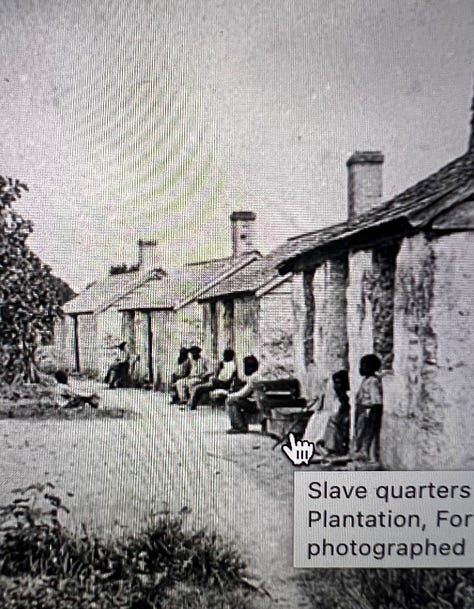
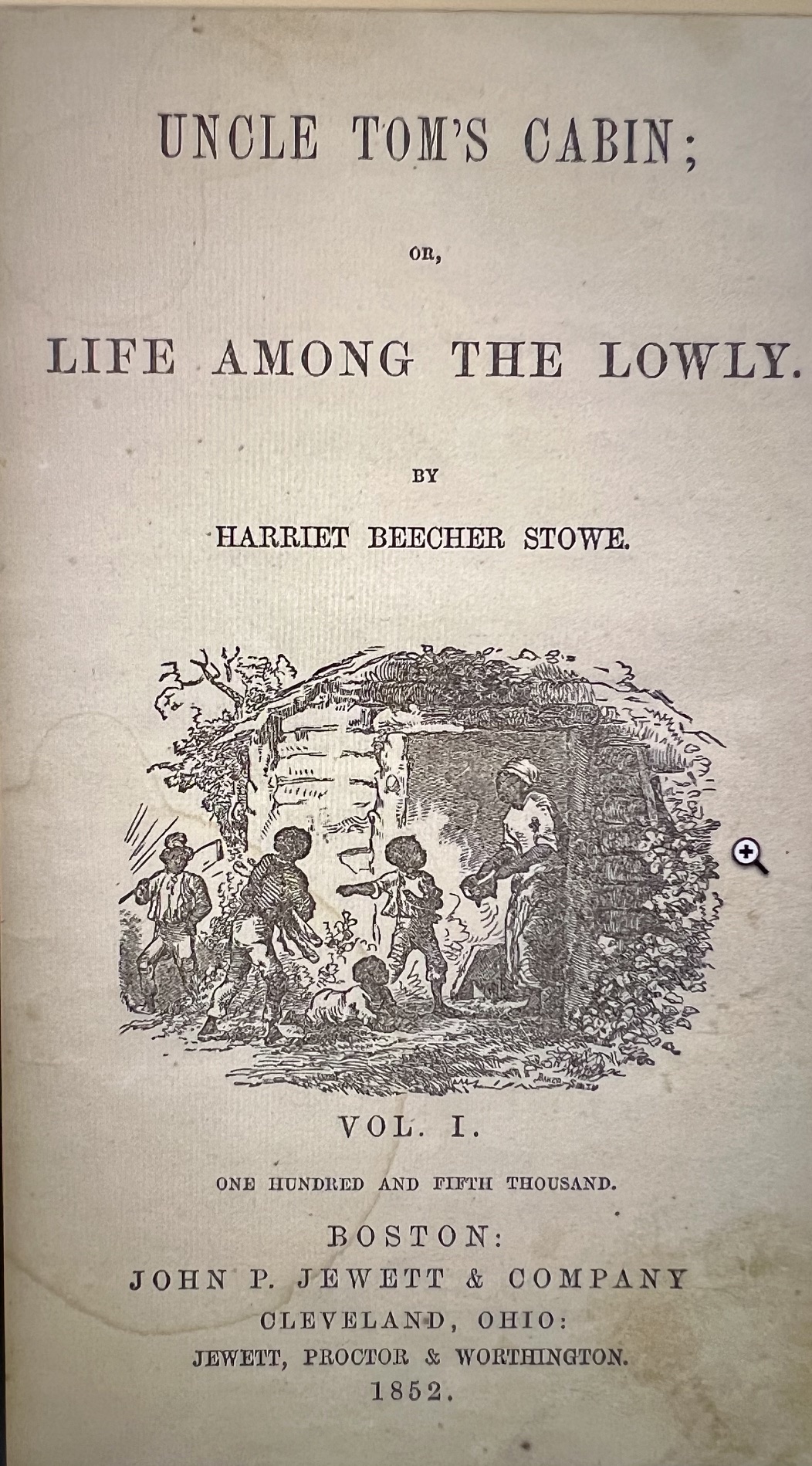
(Public domain photographs of 1865 Slave Quarters, and of the original cover of “Uncle Tom’s Cabin, or Life Among the Lowly,” by Harriet Beecher Stowe (1850), the book that highlighted the tiny little hovels, and horrendous conditions under which slaves were forced to live. In, the last panel is the logo of the Healdsburg SMART Train Station, an enthusiastically supported change expected to create more economic opportunity for all—regardless of income— in the wealthy North Bay community, in transportation, affordable housing and the job market.)
I sat in the crowded hearing room in Healdsburg City Hall on Monday night, August 11, to hear and see the City’s Planning Commission present a proposal for a new Housing development, across the street from the soon-to-be built SMART Train Station.
Many of us—long-time residents and relative newcomers alike—were enthusiastic supporters of the SMART Train extension into Healdsburg, as a means of broadening economic opportunity, affordable housing, and more accessible jobs in our wealthy community, often derisively referred to as “Beverly Healdsburg.” We were eager to share the abundance our town had to offer.
Three months earlier, on May 8, 2026, some 1,000 of us packed into our town’s brand new Foley Family Pavilion—funded by the foundation of a leading local wine family— to celebrate the Healdsburg Station Groundbreaking. Every local, state and federal elected official representing our region attended, shook hands, spoke, and cut a huge-ribbon. We all whooped and hollered when our State Senator, former Healdsburg Mayor, professional auctioneer and soon to be new Member of Congress Mike McGuire led us all in cheering that “A New Train Was Coming To Town.” Excitement and pride in our City was palpable.
I sat, surrounded by friends & neighbors on that beautiful day in May, and thought of August Wilson’s Pulitzer Prize nominated play, “Two Trains Running,” which focused on the competing choices we each face in life. The unforgettable quote of one of the main characters kept playing in my mind, like background music:
“There are always and only two trains running. There is life and there is death. Each of us rides them both.”
That day we were all choosing life, and putting people’s basic needs ahead of profits.
Like Mike McGuire, we could see the future, and we loved it, and felt the economic opportunity that ALL of our neighbors could enjoy, regardless of income. Farmworkers, hospitality workers, restaurant staff, small business owners and their employees, would be able to get to their jobs by taking the train to Healdsburg, or south to Santa Rosa, Petaluma, San Rafael, or anyplace else. Tourists would arrive by the trainload to visit Healdsburg’s restaurants, hotels and wineries and sample our exploding music and art scene, and our hospitality.
Anticipating this—and reflecting our town’s overwhelming support for the”New Train Coming to Town,”—Healdsburg’s 5-member, elected City Council created the Healdsburg Station Area Specific Plan, guaranteeing community involvement, of which the City’s website clearly states:
“This plan will integrate housing, infrastructure and multimodal transit improvements, ensuring sustainable and transit-oriented growth around the SMART Station…and, a programmatic environmental impact report will be prepared as well.”
A highly educated and engaged electorate has demanded that the City of Healdsburg follow this formula for citizen participation. It has successfully, and sometimes painfully, followed it many times before by creating special planning districts for new housing, hotel and retail developments in other parts of town:
- The Mill District, which contains both the most expensive apartments in town and some of the most affordable in The Randall, an exquisitely designed and economically accessible housing complex, which houses very low, and low income families in the very heart of Healdsburg;
- The Saggio Hills District, where, after years of negotiations, three phases of affordable housing (covering a range of low-income and some moderate income levels) are being built as part of a compromise with Le Montage resort, with the first three-story section on upper Parkland Farms Road scheduled to open in two months;
- The NorthVillage district, where an upscale, comprehensive and legitimate Continuing Care Facility (Enzo Village) faces not only a Charlie Palmer resort, Appellation Healdsburg (rated one the finest resorts in the country by Travel & Leisure), but also the aesthetically beautiful and very affordable Burbank Housing development—Bowman Place—which sits above planned retail space, looking right into the terraces of Enzo Villages million-dollar apartments.
Each of those special planning districts, took years of hard work and compromise to integrate a diversity of housing options for all working families as well as wealthy ones, in various neighborhoods of Healdsburg. The clear intent, and contract with the community, was that the same multi-party planning process would be followed again in the SMART Station Area Specific Plan, especially since local, state and SMART train transportation and housing priorities are to make mass transit more accessible for working families.
All of that excitement, community involvement, and careful city planning was jettisoned on August 11, when the City’s Planning Commission unanimously decided to bull ahead with a 3.6 acre housing proposal in the shadow of the SMART Train Station, without EVER convening one session of the City’s promised “Healdsburg Station Area Specific Plan.” The democratic process that makes small city life in Healdsburg special, and desirable, had been shattered. “The Hudson” housing development was being shoved down our throats, whether we liked it or not.
This utter disconnect was shocking to every Healdsburg resident in the room: our elected-City Council committed, in writing, to move in one direction in the immediate SMART Train Station Area, and the Planning Commission, elected by no one, moved in the entirely opposite direction. The only way we could stop this train from running off the track, was to file a detailed citizen appeal (which is presently being done), at the cost of $1800 to Healdsburg taxpayers who simply want a place at the town’s ample table, and a fair process to be followed, with our outrage compounded by the fact that we have to pay extra—$1800 extra— just to get heard by our elected officials.
Pulverizing the democratic process was only the first surprise the Planning Commission had for Healdsburg’s taxpayers. Still to come was their act of sheer civic cowardice (‘We have no choice,” ) in the face of a well-financed, and clever bastardization of both our local and state Senior Housing Laws, and the microscopic shrinking of the size of the Affordable housing the proposal provided.
In quickly became evident that “The Hudson’s” senior housing (masquerading as a continuing care community) was really only a ruse to sell the luxury, large sized units (from 1600 to 2,000 sq. ft,) to wealthy seniors who could afford the astronomical buy-in rate of at least $700,000 per unit, the “market rate,” established 2 years earlier by Enzo Village, a legitimate Continuing Care/Long Term Care/Memory Care facility in North Healdsburg. (Ironically, Enzo Village—which went through a long and arduous planning process with the City, has more, and larger sized “affordable” units, for people in need of the kind of health care provided, who are not wealthy. Enzo Village has 221 Independent Living units; 30 Assisted Living units/beds; and 24 units for Memory Care patients. The Hudson’s is planning only 6 Memory Care units, and thus, far, it’s “Assisted Living” claim is in need of life support.
“Senior Housing” under “The Hudson’s” proposal is for wealthy seniors only, despite the abuse of the name—and making a mockery of the label “affordable housing”—in order to game the California Density Board Law, and Healdsburg’s Inclusionary Housing Ordinance, and secure an increase in the number of “market rate” units it could sell.
And if the “Wealth Wall” wasn’t an insurmountable hurdle for most moderate income Healdsburg Seniors to scale at “The Hudson”—22% of Healdsburg’s population is in the 65-84 age range—the claustrophobic closet-sized “Affordable” housing units immediately eliminates “working families” from the mix of prospective tenants, in violation of Healdsburg’s own Inclusionary Housing Ordinance.
Bruce Abramson, a long-time Healdsburg resident and advocate for affordable housing, stated the facts quite clearly in his public testimony to the Planning Commission:
“The public should know that the average size of the luxury market rate units (at the Hudson) is 1,681 square feet, in comparison to the 377 square feet for the 10 “affordable units.”
All of the “affordable units” at The Hudson are studio apartments, unlike every other Affordable Housing development in town which include many one, two and three bedroom units to house entire families. For example, at “The Randall” in the Mill District, there are 19 one-bedrooms, 11 two bedrooms, and 11 three bedroom apartments.
The Hudson’s hardly human-sized units are slightly larger than the Slave Quarters, or Slave Cabins, or “pens,” of the 19th Century, when entire slave families of five or six were expected to shoehorn themselves into 250 square feet or less.
Harriet Beecher Stowe writing in “Uncle Tom’s Cabin, or Life Among the Lowly” in 1850, and then again in “A Key to Uncle Tom’s Cabin,” in 1853, described the sub-standard Slave housing this way:
“The Negroe quarters are of frame and clapboard, seldom affording a comfortable shelter from wind and rain; their size varies from 8 x 10, to 10 x12, to six to eight feet high. Sometimes there is a hole cut out for a window, but I never saw a sash or glass in any…all the Negroes on the plantation were lodged in hovels, as is the custom in the country.”
While “The Hudson” is not proposing to construct “hovels,” the asphyxiating affordable housing “pens” planned for across the street from the SMART Train Station—which clearly excludes working families larger than one person—smash Healdsburg’s humane affordable housing standards established over decades: from Fitch Mountain Terraces I & II near Badger Park; to the Parkland Senior Housing, at the entryway to Parkland Farms; and, to more recently, The Randall in the Mill District, Burbank’s Bowman Housing near Enzo Village, and all three planned phases of Saggio Hills.
Planning Commission members, City Attorneys and even some elected Healdsburg City Council members will lamely lament that their “hands are tied,” or “they have no choice.” When they say that, remind them of what the brilliant Yale Professor Timothy Snyder (author of On Freedom, On Tyranny, Black Earth, and many other books) has written:
“One of the most dangerous sentences in politics is ‘We Have No Choice.’ There is almost always a choice, even if every choice is difficult. Once leaders convince themselves that history, revolution, national survival, or some higher cause has eliminated all alternatives, almost anything can become permissible.”